How Septic System Works PA: Homeowner Guide
Learn how septic system works PA step by step. This plain-English guide covers the tank process, drain field explained, and PA system types.
Understanding how septic system works PA-wide helps you maintain yours properly, spot problems early, and make better repair decisions. About 1.15 million Pennsylvania households rely on on-lot sewage disposal, yet many homeowners don't know what's happening underground.
The basic concept is straightforward: wastewater flows to an underground tank, gets partially treated by bacteria, then moves to a drain field where soil provides the final cleanup. The details matter, though — especially in Pennsylvania, where varied soil and terrain create unique challenges.
How Septic System Works PA: The Basic Process
Every on-lot sewage disposal Pennsylvania system follows the same general sequence, whether it's a simple conventional setup or an advanced alternative design.
Step 1: Wastewater Leaves Your Home
Everything that goes down your drains — toilets, sinks, showers, washing machine, dishwasher — travels through a single main sewer line to the septic tank. This pipe exits your home's foundation and runs underground to the tank, typically 10 to 30 feet from the house. It slopes downhill at about 1/4 inch per foot so gravity moves the water.
Step 2: The Septic Tank Process
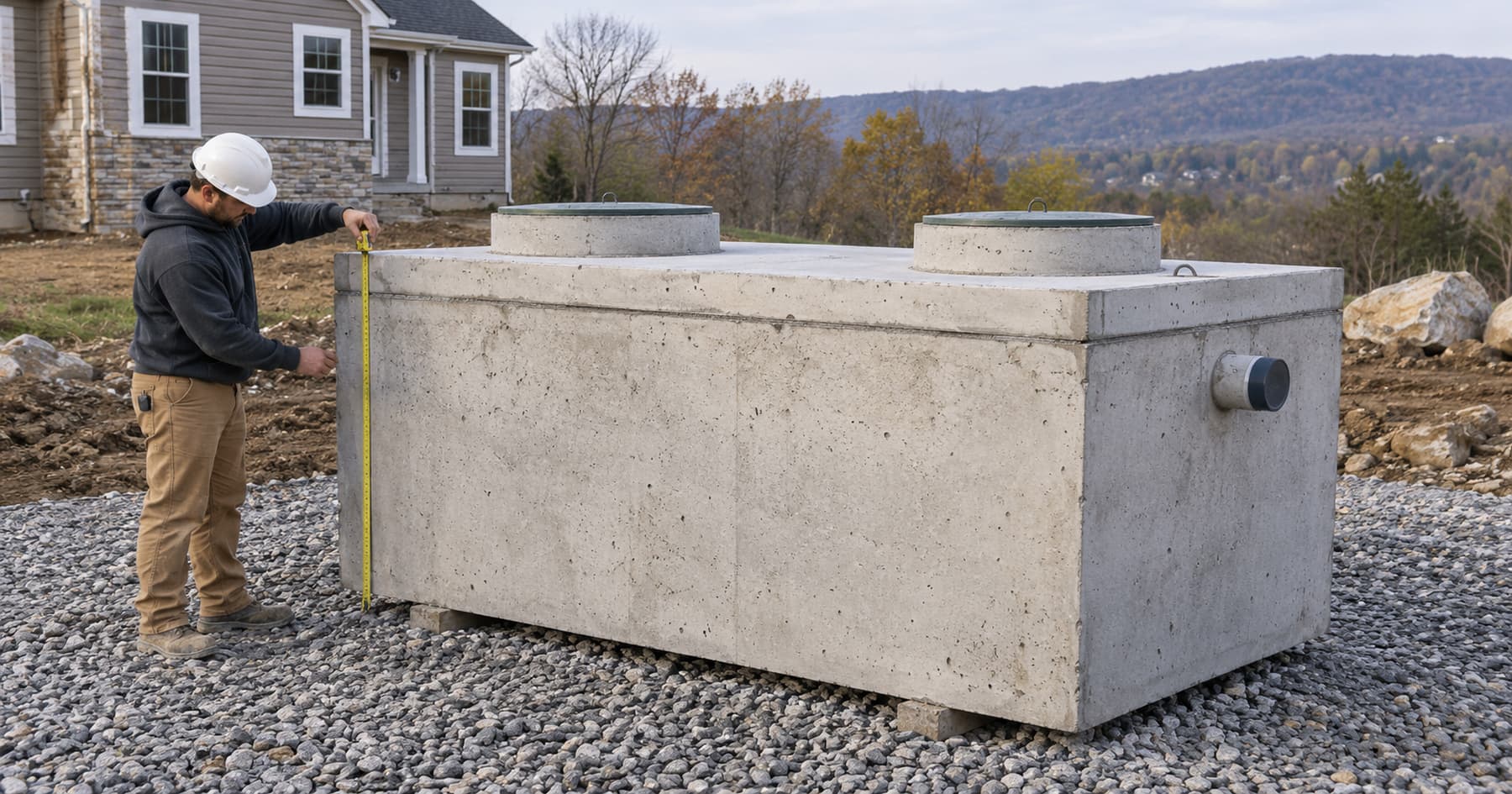
The tank is a watertight container, usually made of precast concrete in Pennsylvania. A typical PA residential tank holds 900 to 1,500 gallons. Inside, three things happen simultaneously as part of the septic tank process.
Settling. Heavy solids sink to the bottom, forming a sludge layer. This includes everything from food particles to human waste to laundry lint.
Floating. Oils, grease, and light materials rise to the top, creating a scum layer. Baffles at the inlet and outlet keep this layer from flowing out.
Bacterial digestion. Anaerobic bacteria (organisms that thrive without oxygen) slowly break down organic matter in the sludge layer. This reduces the volume of solids over time, but it never eliminates them entirely — which is why pumping is necessary.
The middle layer between the sludge and scum is relatively clear liquid called effluent. This is what flows out of the tank to the drain field. It's not clean water — it still contains dissolved organic matter, nutrients, and bacteria — but the tank has done its job of removing most solids.
Step 3: Distribution to the Drain Field
Effluent exits the tank through an outlet baffle and flows to the drain field (also called an absorption area or leach field). In many PA systems, it first passes through a distribution box (D-box) that splits the flow evenly among multiple trenches.
Some PA systems use a pump to move effluent to the drain field, especially when the field sits uphill from the tank or the design uses pressure distribution for more even spreading. Sand mound systems always require a pump.
Step 4: Soil Treatment — The Drain Field Explained
The drain field is where the real treatment happens, and understanding the drain field explained in simple terms helps you appreciate why protecting this area matters so much.
Effluent flows through perforated pipes laid in gravel-filled trenches. It seeps out of the pipe holes, trickles through the gravel, and enters the native soil. As it moves downward through the soil, three natural processes clean it.
Physical filtration. Soil particles trap suspended solids and bacteria. The smaller the soil particles, the better the filtration — which is why clay soils can actually produce cleaner effluent (just more slowly).
Biological treatment. Aerobic bacteria living in the upper soil layers digest remaining organic matter. This is why the absorption trenches must be a certain distance above the water table — the bacteria need oxygen from the soil above.
Chemical processes. Soil minerals bind and neutralize some contaminants, including phosphorus. By the time the water reaches the groundwater table, it should be clean enough to meet drinking water standards.
On-Lot Sewage Disposal Pennsylvania: PA System Types
Pennsylvania's terrain and soil diversity means you'll encounter more system types than in most states. Your local SEO determines which type your property can use based on soil testing.
Conventional Gravity System
The simplest and cheapest option. Works where soils percolate at acceptable rates and the water table sits deep enough. Gravity moves everything — no pumps, no electricity, no moving parts. This is the standard on-lot sewage disposal Pennsylvania system where conditions allow.
Conventional Pressure Distribution
Similar to gravity systems but uses a pump to distribute effluent evenly across the drain field. Better for sites with marginal soils because even distribution prevents overloading any one area.
Sand Mound System
The most common alternative system in PA. When soil drains too slowly, the water table is too high, or bedrock is too shallow, a sand mound raises the treatment area above the limiting condition. An engineered sand bed sits on top of the native soil, and effluent is pumped up into it. Sand mounds are visible on the landscape — a raised, grassy berm typically 3 to 5 feet high.
Elevated Sand Mound
A variation for the most challenging PA sites. The mound is built higher, with additional treatment layers, for locations where the combination of poor soil and high water table severely limits options.
Aerobic Treatment Unit (ATU)
Uses air injection to promote faster bacterial digestion. Produces much cleaner effluent than conventional tanks, allowing smaller drain fields. Requires electricity and regular maintenance. Common on small lots and near environmentally sensitive areas.
Drip Irrigation System
Distributes treated effluent through small-diameter tubing in shallow trenches. Works on sites where other options fail. Higher cost but very flexible in design.
The Role of the SEO in Pennsylvania
Every PA municipality has a Sewage Enforcement Officer (SEO) — a state-certified official who enforces on-lot sewage regulations. The SEO is your primary point of contact for anything septic-related, and understanding their role helps you work with them effectively.
The SEO conducts or witnesses soil testing (perc tests and probes) for new systems. They review and approve system designs submitted by installers. They inspect installations at critical stages during construction.
SEOs also investigate complaints about malfunctions and issue permits for new systems, repairs, and replacements.
Your SEO isn't trying to make your life harder. They're protecting your groundwater and your neighbors' groundwater. Work with them, not against them. Find local PA septic professionals who regularly work with your municipality's SEO.
What NOT to Put Down Drains in a PA Septic Home
Your septic system relies on living bacteria. Anything that kills those bacteria, clogs pipes, or overwhelms the system shortens its lifespan.
- Never flush: wipes (even "flushable" ones), feminine products, condoms, cat litter, medications, dental floss, cigarette butts, or paper towels.
- Never pour down drains: grease, cooking oil, paint, solvents, pesticides, harsh chemicals, or bleach in large quantities.
- Use sparingly: antibacterial soap, drain cleaners, and garbage disposals. All of these stress the biological process.
Stick to human waste, toilet paper, and normal household wastewater. Your bacteria do the rest. Browse our PA directory for more maintenance tips from local professionals.
Frequently Asked Questions About How Septic Systems Work in PA
How often should a PA septic tank be pumped?
Every 3 to 5 years for most households. A family of two with a 1,000-gallon tank can stretch to 5 years. A family of five with the same tank should pump every 2 to 3 years. Your pumper measures sludge and scum levels to tell you exactly when to schedule the next service.
Does a septic system need electricity?
Conventional gravity systems don't need electricity — they run entirely on gravity. Sand mound systems, aerobic treatment units, and pressure distribution systems require electricity for pumps and/or aerators. If you have a pump, consider a battery backup alarm to alert you if power fails.
Can a septic system handle a hot tub?
Draining a hot tub into the septic system dumps 300 to 500 gallons at once. This hydraulic shock can push solids into the drain field. If you have a hot tub, drain it onto open ground away from the drain field and well — never into the septic system. Check your municipality's rules on surface discharge.
What's the difference between a septic tank and a cesspool?
A cesspool is an unlined pit that receives raw sewage. A septic tank is a sealed, watertight container. Cesspools are illegal for new construction in PA and most were phased out decades ago. If your property has a cesspool, your SEO will eventually require you to upgrade to a permitted septic system.
Find Pennsylvania providers
Connect with local professionals in Pennsylvania for your septic or well water needs.
Related reading
 city-guide
Well Drilling Cost Pennsylvania: 2026 Price Guide
The well drilling cost Pennsylvania homeowners pay ranges from $5,000 to $15,000+. Get 2026 prices by region, depth, and geology in this detailed guide.
 state-guide
Septic Companies Lancaster PA — Local Experts (2026)
Trusted septic companies Lancaster PA homeowners rely on for pumping, inspections, and repairs. Get the full Lancaster County septic guide for 2026.
 state-guide
Septic Companies Allentown PA — Lehigh Valley (2026)
Top septic companies Allentown PA and the Lehigh Valley area. Find pumping, inspection, and repair services across Lehigh and Northampton counties.