Mound Septic System Minnesota Guide: How Mounds Work, Costs, and Care
Mound septic systems dominate Minnesota because glacial soils drain slowly. See how mounds work, maintenance rules, costs, and mound vs at-grade choices.
On this page (15)
A mound septic system minnesota lots often end up with is not a luxury or an upgrade — for hundreds of thousands of properties, it is the only system state code allows. If your yard drains slowly, sits near the water table, or was carved from glacial lakebed, the mound builds a drainfield above the problem instead of through it.
Why are mounds everywhere in Minnesota? Ice. Glaciers ground bedrock into clay and left fine lakebed sediment across much of the state. Glacial Lake Agassiz left deep clay plains across the northwest. Water moves through that soil too slowly for trenches to treat sewage before it reaches groundwater. Minnesota Rules Chapter 7080 require three feet of unsaturated, suitable soil under any treatment area. Where nature did not provide it, a mound supplies it with clean sand.
How Does a Mound System Work?
A mound has four working parts:
- Septic tank — receives waste, holds solids, clarifies liquid effluent.
- Pump chamber — a second tank or compartment with a pump that doses effluent in batches.
- Distribution network — small pipes with small holes, fed under pressure across the mound top.
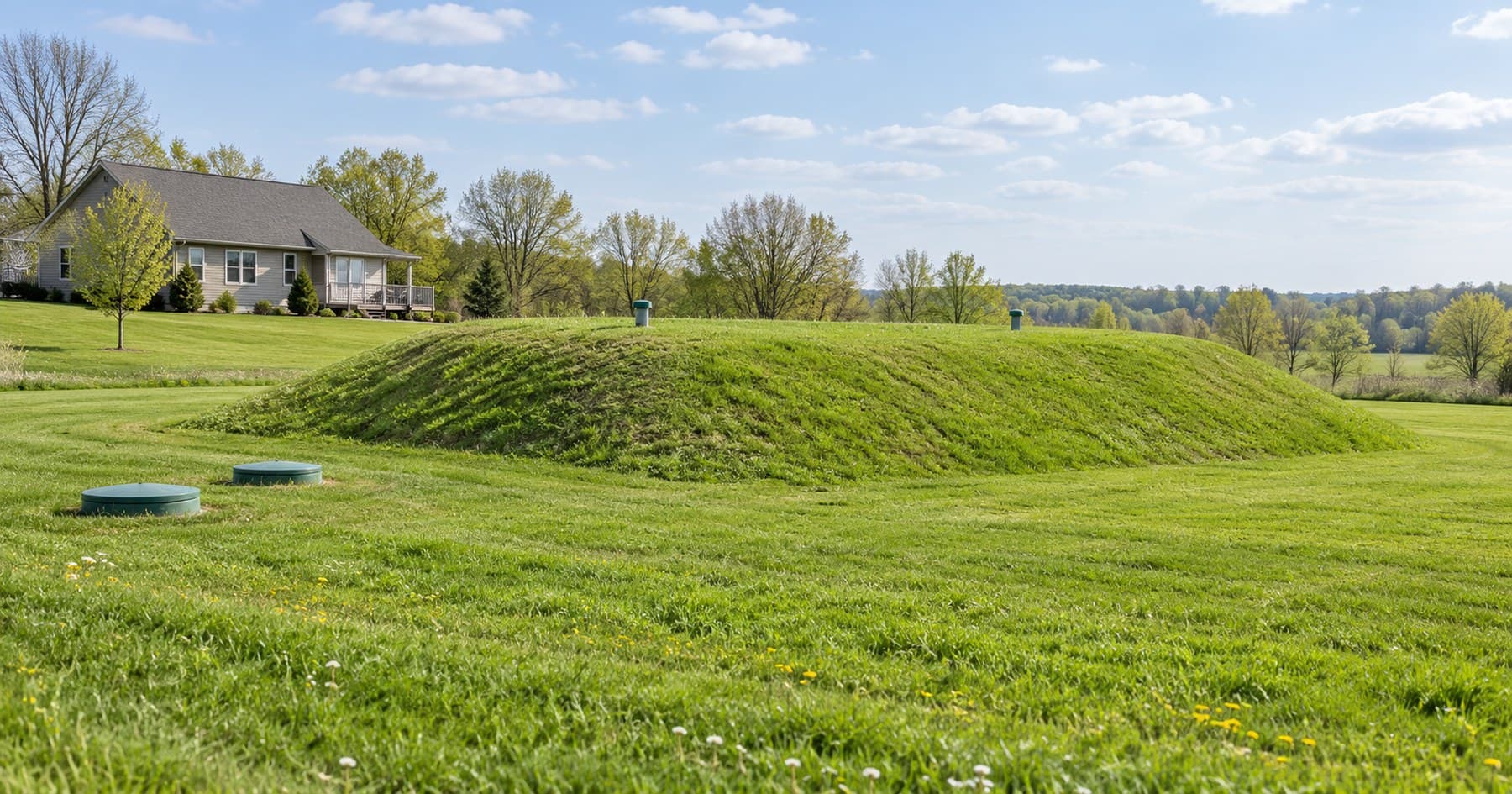
- The mound itself — about 24 inches of clean sand laid on tilled native soil, topped with the distribution pipes, rock or chambers, and a grassed soil cover.
The dosing and the sand do the real work. Pressure dosing spreads effluent evenly in short bursts, so no spot saturates. Bacteria live on the sand grains and consume pathogens as effluent trickles through. The water then enters native soil slowly enough to finish treatment. Done right, the water leaving a mound's base is cleaner than what an old gravel trench puts into the ground.
Mound vs At-Grade vs Trench: Your Lot Decides
| System | Where it works | Profile above grade |
|---|---|---|
| Trench (gravity) | Fast soil, deep separation to water | Flush |
| At-grade (ATG) | Medium soil, most separation exists naturally | Low berm |
| Mound | Slow clay or shallow water — sand supplies the missing depth | Full mound, 3–4 ft |
On the at-grade vs mound minnesota question: an at-grade system is a mound's leaner cousin. Same pressure distribution, laid on tilled native soil with only rock and cover above — no deep sand bed, because the site already has enough natural separation. If your designer offers ATG, that is good news. It means your soil does part of the work, and the price lands between trench and full mound. Soil borings, not contractor preference, decide which options exist.
Mound System Maintenance MN Owners Actually Need
Pump the tank on schedule
Every two to four years for most households. Solids that escape a neglected tank end up in the pump chamber and distribution pipes — the most expensive failure mode a mound has. The laterals are small pipe with small holes. They clog with solids a trench system would shrug off. See our Minnesota pumping schedule for intervals by household size.
Never drive on it
The cover sheds water while staying open to air. Vehicles compact the cover and can crush pipes. Even snowmobiles and ATVs compress the winter frost blanket. Mow it, walk it, keep it grassed — nothing heavier.
Watch the alarm
Pump-equipped systems have float alarms. One chirp after laundry day plus houseguests may clear itself. A persistent alarm means a pump, float, or clog problem. Call a licensed service provider promptly. Running a mound on a dead pump saturates the sand bed and can permanently damage it.
Keep water moving away from the toe
Water leaving the mound's edge needs to drain. Do not berm or mulch against the mound. Route downspouts and sump pumps away from it.
Landscaping a Mound Without Hurting It
Plant grass over the whole mound. Native short-grass mixes work well and need less mowing. Skip deep-rooted trees and shrubs — roots find the distribution pipes. Skip vegetable gardens too. Never rototill the cover. A well-grassed mound that reads as a gentle rise in the yard is a fully successful install.
What a Mound Costs to Build and Keep
New mound installs in Minnesota generally run $20,000 to $35,000. For the full breakdown by line item, see our septic system cost minnesota guide. Ongoing costs run above a gravity trench: pump on the same schedule, plan a pump replacement every 10 to 15 years ($1,500 to $3,000 with controls), and clean the effluent filter at each pumping.
For design, installation, or service, our Minnesota directory lists MPCA-licensed SSTS installers by county.
Why a Mound Septic System Minnesota Build Makes Sense on Clay
Homeowners sometimes ask whether they can "just fix" slow soil with a bigger trench. The answer is no, and the reason is physics. Treatment happens in the unsaturated soil zone, where air and bacteria meet the wastewater. Clay particles hold water so tightly that a trench in clay stays saturated. Nothing gets treated. Mounded clean sand recreates that unsaturated zone above the clay, where treatment works as intended.
The design also protects the aquifer. Three feet of separation filters pathogens before effluent reaches groundwater — the water your well drinks. That separation rule is why Minnesota's approach to slow soil costs more up front and protects the water supply for decades.
Frequently Asked Questions
How long do mound systems last in Minnesota?
The sand bed typically lasts 20 to 30 years with good care. Tanks last 40 years or more. Pumps and controls are the recurring replacement items.
Can a mound be built on a sloped lot?
Yes. Mounds handle slopes better than trenches using a contour design. Slopes above roughly 25 percent get very difficult for any soil treatment system.
Why does my mound smell?
A healthy mound should not. Odor can mean a saturated bed, a vent issue, or a tank due for pumping. Persistent sewage odor over the mound warrants a service call.
Do mounds freeze in Minnesota winters?
Rarely, when used regularly and covered with snow. Idle systems in deep cold with bare ground are the freeze risk. Our winter care guide covers prevention.
Find Minnesota providers
Connect with local professionals in Minnesota for your septic or well water needs.
Get free quotesRelated reading
 how-to
Septic System Freezing in Minnesota: Prevention, Thawing, and Winter Rules
Septic system freezing in Minnesota hits idle systems and bare-ground winters. See what freezes, why snow is your best insulation, and fixes.
 cost
Well Drilling Cost in Minnesota (2026): Depth, Aquifers, and Price Breakdown
Well drilling cost in Minnesota averages $6,900 — most complete systems run $7,000-$18,000. See per-foot rates, casing options, and MDH rules.
 how-to
Minnesota Septic Inspection When Selling: Compliance, Disclosure, and Costs
Selling a home in Minnesota with a septic system? Here is the compliance inspection timeline, disclosure requirements, and what fails most often.