New Construction Septic Permit South Carolina
New construction septic permit south carolina requirements include SCDES applications, site evaluations, and 4-8 week timelines. Complete permit process guide.
Getting a new construction septic permit south carolina is one of the first critical steps when building a home on property without access to municipal sewer. The South Carolina Department of Environmental Services (SCDES) — which replaced DHEC for environmental permitting on July 1, 2024 — requires every new onsite wastewater system to be permitted before any construction begins. If you skip this step or apply too late in the building process, you risk expensive delays, redesigns, or even the inability to build on your chosen lot.
This guide walks you through the entire SC new home septic permit process, from the initial application to final system approval. Whether you are a homeowner building your first house, a contractor managing a new development, or a real estate investor evaluating raw land, understanding these new construction septic requirements SC enforces will help you plan your timeline and budget accurately.
New Construction Septic Permit South Carolina: When to Apply
Timing is everything when applying for a new construction septic permit in South Carolina. The single most important rule is to apply before you pour your foundation — ideally before you even finalize your home's footprint on the lot. SCDES must evaluate the soil conditions and approve a system design before construction begins, because the location of your septic system directly affects where you can place your house, driveway, and other structures.
The typical timeline from application to permit issuance is 4 to 8 weeks, though this can stretch longer during peak building season (March through October) or for sites that require engineered solutions. If you are financing your construction with a bank loan, the lender will likely require proof of a septic permit before releasing funds for the foundation pour. FHA and VA construction loans have especially strict requirements around septic system approval.
Many first-time builders make the mistake of designing their home layout first, then trying to fit the septic system around it. This approach frequently leads to problems. Instead, start with the septic evaluation so you know where the drain field and repair area must go, then design your home around those constraints. This is especially important on smaller lots, lots with steep slopes, or properties in the Piedmont region where clay soils limit suitable drain field locations.
SCDES Application Process for SC New Home Septic Permit
The SCDES permit application process for new construction follows a structured sequence. Each step must be completed before moving to the next, and skipping steps or submitting incomplete applications will delay your project.
Step 1: Gather Required Documents
Before submitting your application, you need the following documents ready:
- A completed SCDES onsite wastewater system permit application form
- A recorded property plat or survey showing lot boundaries, dimensions, and acreage
- The proposed number of bedrooms for the home (this determines system sizing — not square footage or number of bathrooms)
- A site plan showing the proposed home location, driveway, well location (if applicable), and any existing structures or easements
- The application fee payment ($300 as of 2026)
- Property owner's contact information and signature (or authorized agent with written authorization)
Step 2: Submit the Application
Applications are submitted to your regional SCDES office. South Carolina has four regional offices — Upstate (Greenville), Midlands (Columbia), Pee Dee (Florence), and Lowcountry (North Charleston). You can submit in person, by mail, or in some cases electronically. Include the full application fee with your submission. Incomplete applications or applications without payment will be returned, adding weeks to your timeline.
Step 3: Site Evaluation
After your application is accepted, SCDES schedules a site evaluation. This is the most critical step in the process. A licensed soil evaluator visits your property and conducts detailed testing to determine what type of septic system the soil can support. The evaluation includes:
- Soil borings at multiple locations across the proposed drain field area
- Percolation rate testing to measure how quickly water drains through the soil
- Identification of the seasonal high water table depth
- Assessment of depth to restrictive layers (rock, dense clay, or hardpan)
- Slope measurements across the proposed drain field and repair area
- Evaluation of setback distances from wells, property lines, streams, and structures
The site evaluation determines whether your property qualifies for a conventional gravity system, a low-pressure pipe (LPP) system, or requires an advanced treatment unit (ATU) or other engineered solution. Properties that fail the evaluation entirely — meaning no suitable soil exists for any system type — cannot receive a septic permit, which effectively prevents construction.
Step 4: System Design and Permit Issuance
Based on the evaluation results, SCDES either issues a permit for a standard system type or requires professional engineering. For conventional and LPP systems, SCDES staff designs the system based on standard specifications in Regulation 61-56. For engineered systems, you must hire a South Carolina-licensed professional engineer to design the system, which adds both time and cost to the process.
Site Evaluation Requirements for New Construction
The site evaluation is where most new construction projects encounter surprises. Understanding what SCDES is looking for can help you select better properties and avoid costly delays. South Carolina's geological diversity means that soil conditions vary dramatically from region to region.
In the Piedmont region (Greenville, Spartanburg, Anderson, York counties), red clay soils with slow percolation rates dominate. Many lots require LPP or engineered systems, pushing costs from $5,000 for a conventional system to $10,000-$25,000 for an alternative system. Rock depth is also a concern — SCDES requires a minimum of 18 inches of suitable soil below the drain field trench bottom.
In the Sandhills region (Aiken, Lexington, Richland, Kershaw counties), sandy soils drain quickly — sometimes too quickly for adequate treatment. SCDES may require systems with enhanced treatment to prevent groundwater contamination. The water table can also be high in low-lying areas, limiting drain field depth.
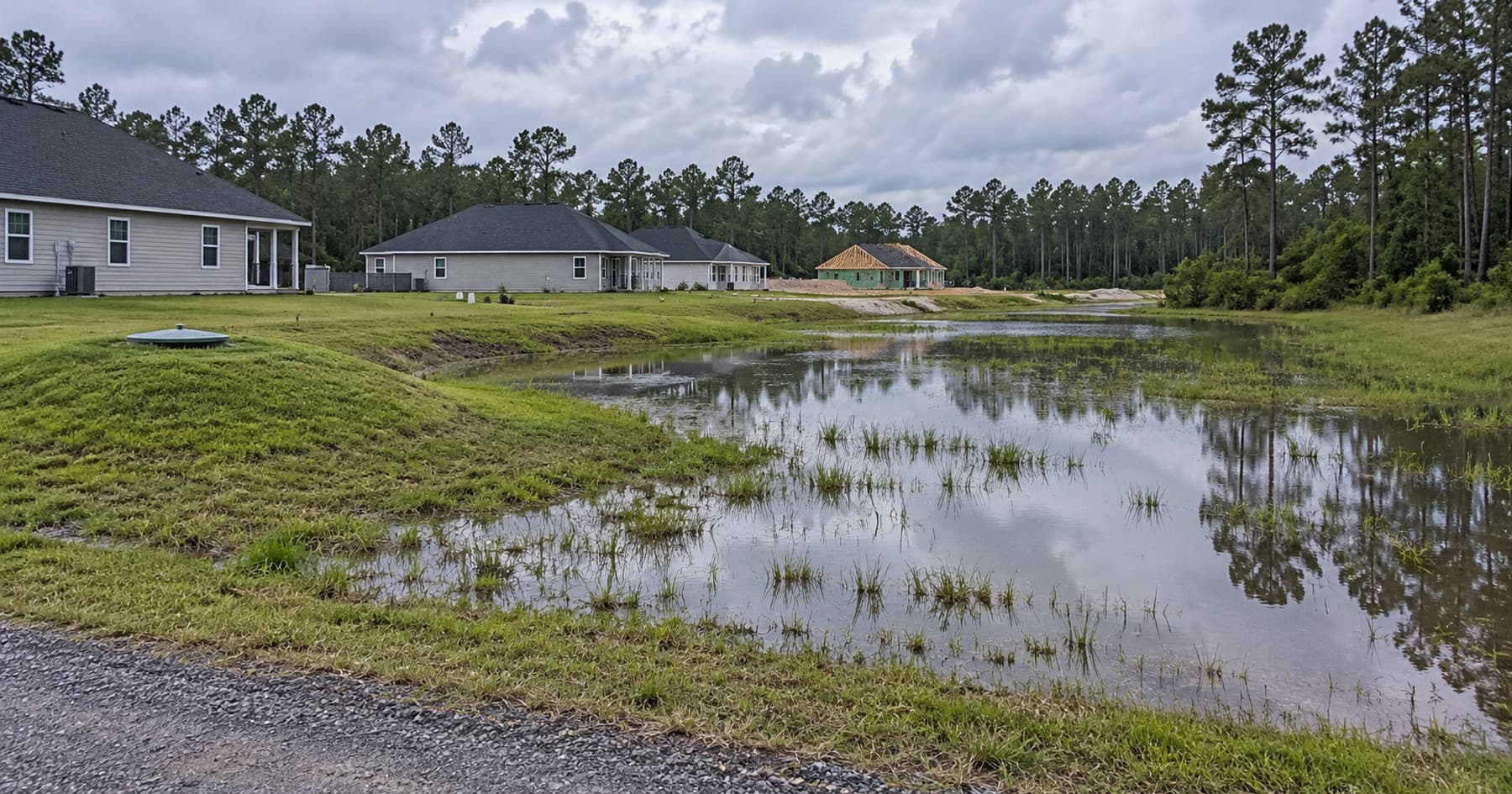
In the Coastal Plain and Lowcountry (Charleston, Beaufort, Horry, Georgetown counties), high water tables are the primary challenge. Many lots in these areas have seasonal high water tables within 24 inches of the surface, which requires mounded systems or ATUs. Flood zone considerations add another layer of complexity for south carolina building permit septic applications in coastal areas.
Repair Area Designation Requirement
One requirement that catches many new construction applicants off guard is the mandatory repair area. SCDES requires every new septic permit to designate a repair area — a separate location on the property with suitable soil conditions that can accommodate a replacement drain field if the primary system fails in the future. This repair area must remain undeveloped and protected from compaction, paving, or construction for the life of the property.
The repair area must be evaluated during the same site evaluation as the primary drain field. It must meet the same soil suitability criteria and setback requirements as the primary system. For many lots, especially those at or near the minimum lot size, finding two separate suitable locations is the biggest challenge. If the evaluator cannot identify an adequate repair area, the permit application will be denied even if the primary drain field location is ideal.
This requirement means that when evaluating raw land for purchase, you should not only consider whether the property can support one drain field — you need enough suitable soil for two. Working with a soil consultant or experienced septic installer before purchasing land can save you from buying a lot that cannot be permitted.
Engineering Requirements for Challenging Sites
When standard system types will not work for your site, SCDES requires a professional engineer to design a custom solution. Engineered systems are common in South Carolina — a significant percentage of new permits statewide involve some level of engineering, especially in the Piedmont and Lowcountry regions.
Engineering costs for new construction septic systems typically range from $3,000 to $8,000, depending on complexity. This cost is in addition to the system installation itself, which ranges from $15,000 to $30,000 or more for advanced systems like ATUs with drip irrigation. The engineer conducts additional testing beyond the standard SCDES evaluation, including detailed topographic surveys, hydraulic conductivity testing, and sometimes groundwater modeling.
The engineer submits stamped drawings, a design narrative, and an operations and maintenance (O&M) manual to SCDES for review. The review process for engineered systems typically takes 2 to 4 weeks longer than standard permits. Once approved, the system must be installed exactly according to the engineer's specifications. Any field changes require engineer approval and may require permit modification.
Costs for New Construction Septic Permits in SC
The total cost of permitting and installing a septic system for new construction in South Carolina varies significantly based on soil conditions and system type. Here is a breakdown of typical costs:
| Cost Component | Typical Range | Notes |
|---|---|---|
| SCDES Application Fee | $300 | Non-refundable, required at submission |
| Site Evaluation (if private) | $400–$800 | Some evaluators charge separately |
| Engineering Design | $3,000–$8,000 | Only if required by soil conditions |
| Conventional System Install | $4,000–$8,000 | Good soils, adequate lot size |
| LPP System Install | $8,000–$14,000 | Marginal percolation rates |
| ATU System Install | $15,000–$25,000 | Poor soils, small lots, high water table |
| Mound System Install | $10,000–$18,000 | High water table areas |
Common Reasons for Permit Denial
Understanding why SCDES denies new construction septic permit south carolina applications can help you avoid these pitfalls. The most common reasons for denial include:
- Insufficient soil depth: Less than 18 inches of suitable soil above the restrictive horizon (rock, dense clay, or water table)
- No viable repair area: The lot lacks a second suitable location for a replacement drain field
- Inadequate lot size: The property is too small to meet setback requirements from wells, property lines, and structures
- Failed percolation: Soil percolation rates exceed the maximum allowed for any system type
- Flood zone restrictions: The property is in a regulated floodway where onsite systems are prohibited
- Wellhead protection: The proposed system location violates wellhead protection area restrictions
If your application is denied, you have options. You can request a review of the denial, provide additional site data, or hire an engineer to evaluate whether an advanced system design could overcome the limiting conditions. In some cases, modifying the proposed home location or reducing the number of bedrooms (which reduces required system capacity) can make a previously denied site permittable.
Coordinating with County Building Permits
A new construction septic permit from SCDES is separate from your county building permit, but the two are closely linked. Most South Carolina counties require proof of a septic permit (or proof of sewer connection) before issuing a building permit. This means your SCDES permit must be in hand before you can pull your building permit and begin construction.
The coordination between SCDES and county permitting is one of the main reasons timing matters so much. If you wait until you have your building permit to start the septic process, you will lose 4 to 8 weeks — or more — waiting for SCDES to complete the evaluation and issue the permit. Instead, start the SCDES application as soon as you have a survey and a preliminary site plan. Many builders submit the SCDES application within the first week of the planning process.
Some counties, particularly faster-growing ones like Horry, York, Greenville, and Charleston, have additional requirements beyond the state SCDES permit. These may include erosion control plans, stormwater management requirements, and additional setbacks. Check with your county building department early in the process to understand all requirements. For licensed septic professionals in your area, browse our South Carolina septic and well water directory.
Working with Licensed Septic Installers
South Carolina requires all septic system installations to be performed by licensed septic installers. For new construction, selecting your installer early in the process offers several advantages. Experienced installers can evaluate your lot informally before you purchase, flagging potential soil issues that could complicate permitting. They can also coordinate directly with SCDES during the evaluation and permitting process, ensuring nothing falls through the cracks.
When comparing installer quotes for new construction, make sure each quote includes the same scope of work. Some quotes include the SCDES application fee and site preparation, while others do not. For a detailed breakdown of costs, see our South Carolina septic installation cost guide. Understanding the full South Carolina septic regulations framework will also help you evaluate whether an installer's proposed approach makes sense for your site conditions.
Frequently Asked Questions
How long does it take to get a new construction septic permit in South Carolina?
The typical timeline from application submission to permit issuance is 4 to 8 weeks for standard systems. Engineered systems that require professional design and additional SCDES review may take 8 to 12 weeks. Peak building season (March through October) can add additional delays due to higher application volumes. To minimize wait times, submit your application as early as possible and ensure all required documents and fees are included with the initial submission.
Can I start building before receiving my septic permit?
No. SCDES requires the septic permit to be issued before construction begins, and most South Carolina counties require proof of the septic permit before they will issue a building permit. Starting construction without a septic permit can result in stop-work orders, fines, and the need to relocate structures that conflict with the required drain field and repair area locations. Always obtain your South Carolina septic permit before breaking ground.
What happens if my lot fails the site evaluation?
If the standard site evaluation finds that your lot cannot support a conventional or LPP system, you still have options. SCDES may recommend an engineered solution such as an ATU, drip irrigation system, or mound system. Hiring a licensed professional engineer to conduct additional testing and design a custom system is typically the next step. In rare cases where no system type is feasible, the lot cannot receive a septic permit and cannot be developed for residential use without access to municipal sewer.
Do I need a separate permit for the well and the septic system?
Yes. The septic system permit from SCDES is separate from the well construction permit. Well construction in South Carolina is regulated under R.61-71, and the well driller must submit a Notice of Intent to SCDES before drilling begins. The septic system and well must meet minimum separation distances (typically 50 feet or more), so it is important to coordinate both permits simultaneously to ensure the site layout accommodates both systems. Your SCDES regional office can provide guidance on coordinating these permits for new construction.
Find South Carolina providers
Connect with local professionals in South Carolina for your septic or well water needs.
Get free quotesRelated reading
 state-guide
Well Drilling Depth South Carolina by Region
Well drilling depth south carolina ranges 30–400+ feet by region. Piedmont, Sandhills, Coastal Plain, and Lowcountry depths compared.
 city-guide
Horry County Septic Challenges: Growth & Flooding
Horry county septic systems face flooding, rapid growth, and high water tables near Myrtle Beach. Challenges and solutions covered.
 city-guide
Aiken County Septic & Well Water Guide for SC
Aiken county septic systems benefit from sandy Sandhills soils but face radium risks in well water. Costs, permits, and SRS concerns.