
Well Pump Replacement PA: Cost and Guide
Well pump replacement PA homeowners face costs $800 to $3,500+. Learn when to replace vs repair, pump types, and how to find qualified PA well drillers.
Your faucets are sputtering, the pressure tank cycles every few seconds, and the water coming out looks like it's been through a mud puddle. For the 870,000 Pennsylvania households on private wells, these symptoms point to one answer: well pump replacement PA homeowners eventually face at least once during their time in a well-equipped home.
A well pump isn't meant to last forever. Submersible pumps — the most common type in PA wells — typically run 8 to 15 years before they wear out. Jet pumps used in shallower wells may last a bit longer but face their own failure patterns. Knowing when a repair makes sense versus when full replacement is the smarter investment saves you money and prevents the frustration of repeated service calls.
Signs You Need Well Pump Replacement PA
Some pump problems are fixable with a repair. Others signal that the pump has reached the end of its useful life and replacement is the right call.
Frequent cycling. If the pressure switch clicks on and off rapidly (known as short-cycling), the pressure tank's bladder may have failed — that's a $300 to $800 fix. But if the tank checks out fine and the pump still cycles rapidly, the pump itself is losing its ability to maintain pressure. That's a replacement situation.
Dropping water pressure. Gradual pressure loss over weeks or months usually means the pump's impellers are wearing down. In PA wells with high mineral content — common in the limestone regions of central and south-central PA — sediment abrasion accelerates impeller wear. Once pressure drops noticeably, the pump is on borrowed time.
Electrical spikes. A pump drawing more electricity than normal (check your electric bill for unexplained increases) is working harder to deliver the same output. Motor windings are failing, and the pump will eventually seize. Replacing it proactively avoids the emergency call when it dies on a holiday weekend.
Dirty or sandy water. If your water suddenly contains sediment, the pump may have dropped to the bottom of the well (broken drop pipe) or the intake screen is deteriorated. Either condition requires pulling the pump from the well — and if the pump is older than 10 years, replacement during that service call makes more economic sense than reinstalling worn equipment.
Age. If your submersible pump replacement PA timeline has been running for 12 to 15 years, plan for replacement even if it's still working. Scheduling the job on your terms costs less than an emergency replacement when the pump fails unexpectedly.
Well Pump Replacement PA: Submersible vs Jet Pumps
Pennsylvania wells use two main pump types, and the replacement process and cost differ significantly.
Submersible Pump Replacement PA
Submersible pumps sit inside the well at or below the water level. They push water up to the surface rather than pulling it, which makes them more efficient for deeper wells. Most PA wells deeper than 25 feet use submersible pumps.
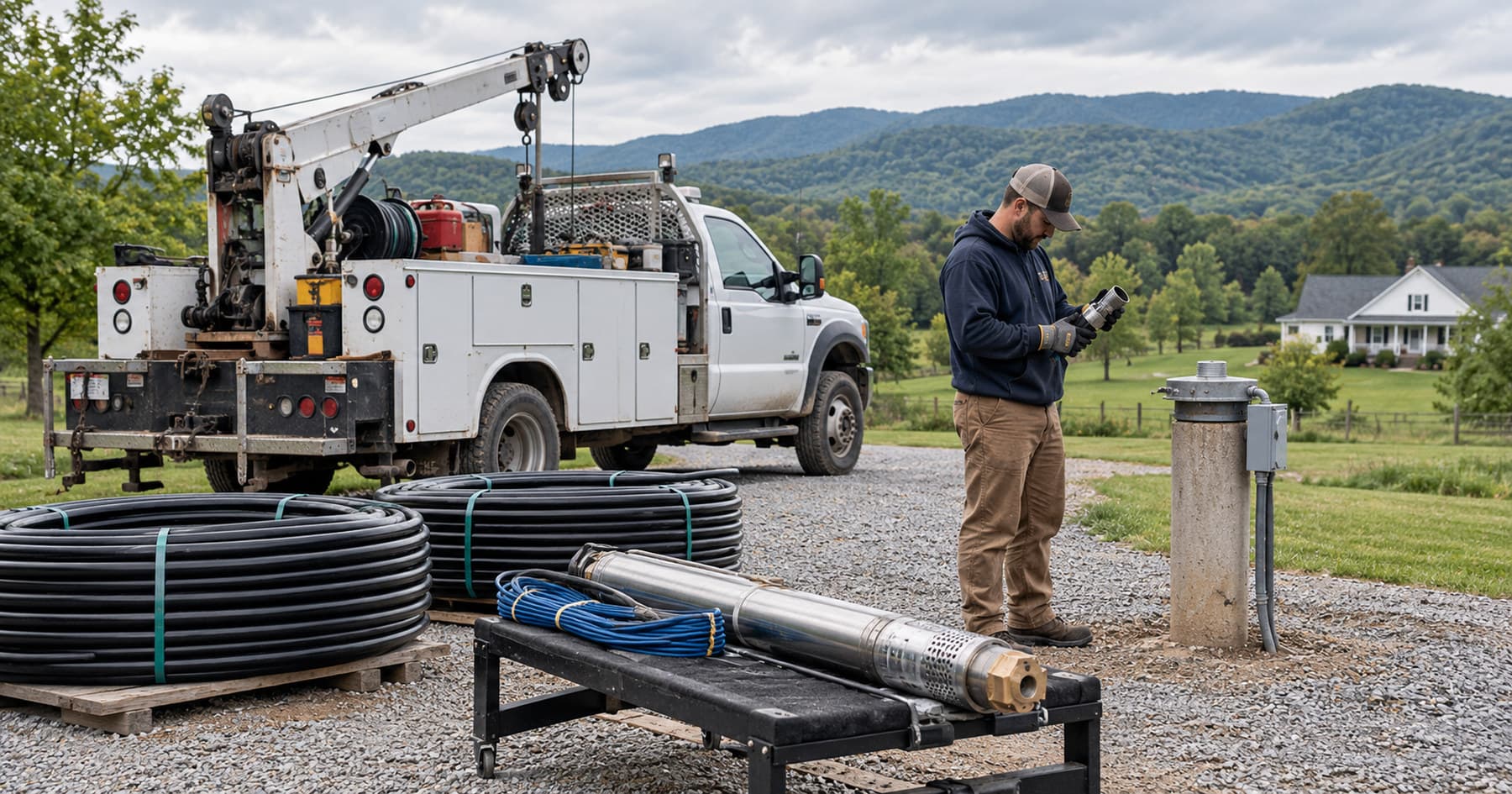
Replacing a submersible pump requires specialized equipment to pull the pump, drop pipe, and wiring from the well. For a 200-foot well, that's 200+ feet of pipe and wire that must be pulled, disconnected, and replaced. This is not a DIY job — it requires a truck-mounted pulling rig and professional well service experience.
Jet Pump Replacement
Jet pumps sit above ground (usually in a basement or well house) and use suction to pull water from shallow wells. They're common on older PA properties with wells under 25 feet and on some point-of-use applications.
Jet pump replacement is simpler because the pump is accessible at the surface. A qualified plumber or well service technician can swap a jet pump in a few hours. However, if your shallow well consistently underperforms, the replacement might include deepening the well and switching to a submersible system — a much larger project.
PA Well Pump Cost: Full Breakdown
| Component | Cost Range | Notes |
|---|---|---|
| Submersible pump (1/2 HP) | $400–$800 | Standard residential wells under 200 ft |
| Submersible pump (3/4–1 HP) | $600–$1,200 | Deeper wells or higher demand |
| Drop pipe replacement | $2–$5/foot | 200 ft = $400–$1,000 |
| Wiring replacement | $1–$3/foot | Usually replaced with pump |
| Pitless adapter (if needed) | $200–$400 | Connects well to supply line |
| Labor (pulling and installing) | $500–$1,500 | Depends on well depth |
| Pressure tank (if replacing) | $300–$800 | Often replaced at same time |
| Total submersible replacement | $1,500–$3,500 | Most PA residential wells |
| Jet pump replacement | $800–$1,800 | Pump + labor, no well work |
PA well pump cost varies most with well depth. A 100-foot well costs significantly less to service than a 300-foot well because of the reduced pipe and wire quantities and shorter pulling time. Wells deeper than 300 feet can push total replacement costs above $4,000.
Well Pump Installation Pennsylvania: Choosing a Contractor
Well pump installation Pennsylvania projects require a contractor with the right equipment and experience. Not every plumber can handle submersible pump work — you need someone with a pulling rig, well knowledge, and ideally registration with PA DEP as a well driller or pump installer.
When getting quotes for well pump replacement, ask these questions.
- Are you registered with PA DEP for well work?
- What brand of pump do you install, and what's the warranty?
- Does the quote include new drop pipe and wiring, or just the pump?
- Will you pull and inspect the existing pump to confirm the diagnosis?
- Do you carry liability insurance and workers' compensation?
Get at least two written quotes. A reputable contractor provides a detailed breakdown — not just a lump sum — so you can compare exactly what's included. Search our Pennsylvania directory for well service companies in your county.
Repair vs Replace: Making the Right Call
Not every pump problem requires full replacement. Here's a quick guide to when repair makes sense.
Replace when: The pump is over 10 years old and showing symptoms. The motor has failed. The pump can't maintain pressure regardless of tank condition. The well produces sand that has abraded the impellers beyond recovery. Find qualified well pump installers in our PA directory to get a professional assessment.
Repair when: The pressure tank bladder has failed (tank issue, not pump). A wiring connection at the surface has corroded. The pressure switch needs calibration or replacement ($100 to $300). The pump is less than 5 years old and a specific component has failed under warranty.
When in doubt, have the contractor pull the pump and inspect it. The pulling cost ($300 to $600) is sunk either way — if the pump looks good, they reinstall it. If it's worn, you replace it while it's already out of the well. Reinstalling a questionable pump to save money now usually means paying the full pulling cost again in a year or two when it finally dies.
Frequently Asked Questions
How long do well pumps last in Pennsylvania?
Submersible pumps typically last 8 to 15 years. Water quality affects lifespan — wells with high sediment, iron, or manganese content wear pumps faster. Constant-pressure systems that run the pump more frequently also shorten life expectancy. Jet pumps last 10 to 20 years because they're accessible for easier maintenance.
Can I replace my well pump myself?
Jet pump replacement is within the capability of a skilled homeowner. Submersible pump replacement is not a DIY project. Pulling several hundred feet of pipe from a well requires a motorized pulling rig, proper safety precautions, and experience handling heavy equipment suspended over an open well bore. Hire a professional.
Should I replace the pressure tank when I replace the pump?
If the pressure tank is over 10 years old, yes. Replacing both at the same time saves a future service call and ensures the new pump operates with properly matched equipment. A new pressure tank adds $300 to $800 to the project but prevents the most common cause of short-cycling that stresses a new pump.
What size pump do I need for my PA well?
Pump sizing depends on well depth, well yield (gallons per minute), and your household water demand. Most PA residential wells use 1/2 HP to 1 HP submersible pumps. A 1/2 HP pump handles wells up to about 200 feet with moderate demand. Deeper wells, larger homes, or properties with irrigation need 3/4 HP or 1 HP units. Your contractor sizes the pump based on your well's specific characteristics.
Find Pennsylvania providers
Connect with local professionals in Pennsylvania for your septic or well water needs.
Related reading
 cost-guide
Well Pump Repair Cost Virginia (2026)
Well pump repair cost virginia homeowners pay ranges $300–$2,000+. Full pricing by repair type, region, and pump depth.
 cost-guide
Well Pump Repair Cost South Carolina (2026)
Well pump repair cost south carolina ranges $200-$800 for repairs, $1,000-$3,000+ for replacement. SC pricing by pump type and depth.
 cost-guide
Well Pump Repair Cost NC: 2026 Pricing Guide
How much is well pump repair cost NC homeowners pay in 2026? Submersible pump repair, replacement, and emergency service call pricing.