
Michigan Septic Tank Size Guide (2026)
Michigan septic tank size requirements by bedroom count. Learn EGLE minimum sizes, when to go bigger, and what affects tank sizing in MI.
Choosing the right Michigan septic tank size is one of the most important decisions you will make when installing a new system. An undersized tank leads to frequent pumping, poor treatment, and premature drain field failure. An oversized tank wastes money upfront without providing meaningful benefits. Michigan's Department of Environment, Great Lakes, and Energy (EGLE) sets minimum tank sizes based on daily design flow, which is determined primarily by the number of bedrooms in your home.
This guide covers the exact Michigan septic tank size requirements for 2026, explains how sizing calculations work, and helps you decide whether going larger than the minimum makes sense for your property.
Quick Answer: Michigan Septic Tank Size by Bedrooms
- 1–3 bedrooms: 1,000-gallon tank (minimum)
- 4 bedrooms: 1,250-gallon tank
- 5 bedrooms: 1,500-gallon tank
- 6 bedrooms: 1,750-gallon tank
Based on EGLE regulations. Read below for when to go bigger than the minimum.
What Are the Michigan Septic Tank Size Requirements by Bedroom Count?
EGLE's sanitary code establishes minimum septic tank capacities based on the number of bedrooms in the home. Bedrooms are used as the sizing metric because they represent the maximum number of occupants the home can accommodate, which directly correlates with daily wastewater production.
| Number of Bedrooms | Minimum Daily Design Flow (GPD) | Minimum Tank Size (Gallons) |
|---|---|---|
| 1–2 bedrooms | 200 | 1,000 |
| 3 bedrooms | 300 | 1,000 |
| 4 bedrooms | 400 | 1,250 |
| 5 bedrooms | 500 | 1,500 |
| 6 bedrooms | 600 | 1,750 |
These are minimum requirements. Your local health department may impose stricter standards depending on site conditions, soil type, and groundwater levels. Always confirm requirements with your county sanitarian before purchasing a tank.
For homes with more than six bedrooms or those with commercial use such as a home daycare or bed and breakfast, EGLE requires an engineered design that accounts for the actual expected wastewater volume. These systems typically need a professional engineer's stamp and may require additional treatment components beyond a standard septic tank.
How Michigan Determines Septic Tank Size?
The sizing calculation starts with the daily design flow, which Michigan estimates at roughly 100 to 150 gallons per bedroom per day. The minimum tank capacity must provide at least 24 hours of retention time for the estimated daily flow, plus additional capacity for sludge and scum storage between pumping cycles.
Daily Design Flow Calculation
Daily design flow is the estimated maximum volume of wastewater the home generates in a single day. Michigan uses bedroom count as a proxy because it is a stable measure that does not change with occupancy. A three-bedroom home is assumed to produce roughly 300 gallons per day, regardless of whether two people or six people currently live there. This ensures the system is sized for the home's full capacity.
Bedroom Count vs. Actual Occupancy
Michigan sizes systems based on bedrooms, not the number of current residents. If you convert a den or bonus room into a bedroom, that change increases the required tank size. Building permits for additions that add bedrooms will trigger a septic evaluation to confirm the existing system can handle the increased load. If it cannot, you will need to upgrade the tank and potentially the drain field before the permit is approved.
Fixture Count Considerations
For homes with an unusually high number of water fixtures such as multiple dishwashers, laundry facilities, or commercial-grade kitchens, the daily design flow may be calculated based on fixture units rather than bedrooms alone. This is more common in mixed-use properties or large homes with in-law suites that function as separate living spaces.
When to Install a Larger Tank in Michigan?
Meeting the minimum Michigan septic tank size requirement keeps you legal, but going larger is often a smart investment. Several common household features and habits increase wastewater volume beyond the standard bedroom-based estimate.
Garbage Disposals
Garbage disposals add a significant amount of organic solids to your wastewater. Michigan septic professionals generally recommend increasing tank size by 200 to 300 gallons if you plan to use a garbage disposal regularly. Some installers advise against using disposals on septic entirely, but if you insist on one, a larger tank gives the system more time to process the additional solids.
Water Softeners
Michigan has notoriously hard water, and water softeners are common throughout the state. Older salt-based softeners discharge significant volumes of brine into the septic system during regeneration cycles. This extra water displaces treatment capacity and can interfere with the settling process inside the tank. If your home uses a water softener, consider increasing tank size by at least 200 gallons or routing the softener discharge to a separate dry well.
High Water Use Appliances
Jetted tubs, multiple shower heads, high-capacity washing machines, and oversized hot tubs all increase daily water use beyond standard estimates. If your home has several of these features, a tank that is 25 to 50 percent larger than the minimum provides a safety margin that protects your drain field from hydraulic overload.
Hot Tubs and Pools
Draining a hot tub into the septic system sends hundreds of gallons of chemically treated water through the system at once. This volume spike overwhelms the tank's settling capacity and pushes partially treated effluent into the drain field. If you have a hot tub, install a separate drain that discharges to a designated area away from the drain field, or size your tank to accommodate the periodic surge.
What Septic Tank Materials Are Available in Michigan?
Michigan septic tanks are manufactured in three primary materials. Each has distinct advantages, disadvantages, and cost profiles that affect your decision.
| Material | Cost Range (Installed) | Lifespan | Pros | Cons |
|---|---|---|---|---|
| Precast concrete | $2,500–$5,000 | 40+ years | Durable, heavy (resists floating), widely available | Can crack from ground movement, heavy to transport |
| Fiberglass | $3,000–$6,000 | 30–40 years | Lightweight, corrosion-resistant, no cracking | Can shift or float in saturated soil, fewer local suppliers |
| Polyethylene (plastic) | $2,000–$4,000 | 20–30 years | Lightest weight, easy installation, affordable | Can deform under soil pressure, may require anchoring |
Concrete Tanks in Michigan
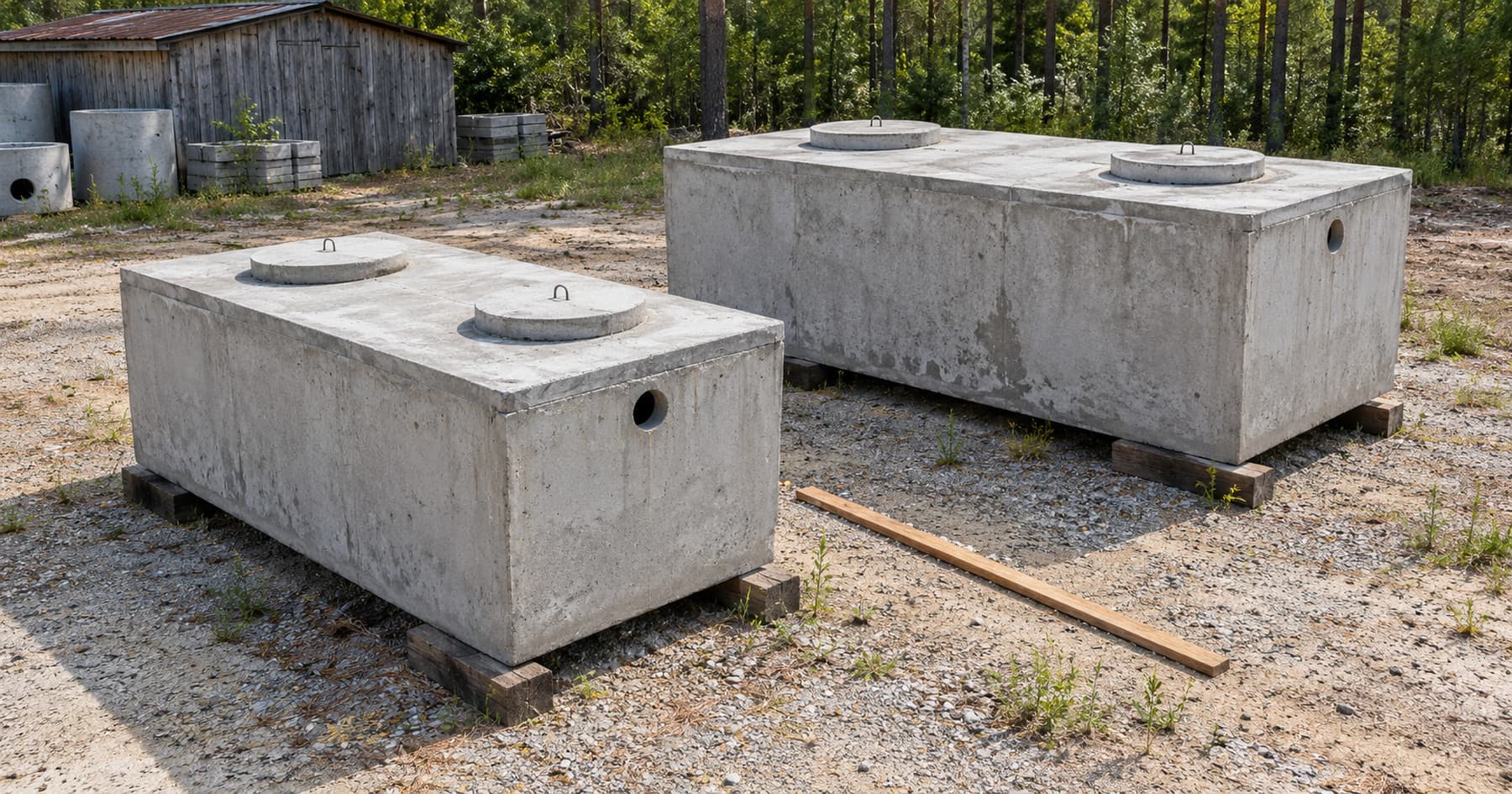
Precast concrete is by far the most popular choice in Michigan. The state's numerous precast manufacturers keep supply strong and costs competitive. Concrete tanks resist buoyancy forces in high water table areas, which is important in many parts of Michigan where spring groundwater levels rise significantly. The main drawback is that Michigan's freeze-thaw cycles can cause hairline cracks over decades, but proper installation depth and quality manufacturing minimize this risk.
Fiberglass and Plastic Tanks
Fiberglass and polyethylene tanks are gaining popularity in Michigan, particularly for sites with difficult access where heavy equipment cannot easily deliver a concrete tank. They are also preferred for replacement projects where the existing excavation limits what can be installed. However, in areas with high water tables, lighter tanks must be anchored to prevent floating during spring thaw when the ground is saturated. Your installer must account for local groundwater conditions when recommending a material.
How Do Michigan Conditions Affect Tank Sizing?
Michigan's climate and geography create unique considerations for septic tank sizing that do not apply in warmer states. Understanding these factors helps you make a decision that holds up over the long term.
Cold Climate Considerations
Michigan's frost line sits at 42 to 48 inches deep depending on your location in the state. Septic tanks must be buried below the frost line to prevent freezing, which means deeper excavation and more backfill. Deeper tanks are harder to pump and inspect, so going slightly larger reduces pumping frequency and extends the interval between service visits. A tank that needs pumping every five years instead of every three saves you significant money and inconvenience in Michigan's long winters when scheduling a pumper can be challenging.
Seasonal Homes and Cottages
Northern Michigan and the Upper Peninsula have thousands of seasonal homes that sit unused for months during winter. Sizing for these properties requires careful thought. While a seasonal home may have fewer total occupants, it often experiences peak usage during summer weekends when the home is full. EGLE still sizes based on bedroom count, so a four-bedroom cottage needs the same minimum tank size as a year-round four-bedroom home. If you host large summer gatherings, consider sizing up to handle the periodic surges.
High Water Table Areas
Large portions of Michigan have seasonal high water tables, particularly in the spring. High groundwater around the tank can cause infiltration through cracks or joints, which fills the tank with clean water and reduces its effective treatment capacity. In these areas, a larger tank provides a buffer against groundwater intrusion. Watertight risers, sealed joints, and regular inspections are also essential to prevent infiltration from overwhelming the system.
For help selecting the right system for your property, browse Michigan septic installation professionals in our directory.
Frequently Asked Questions
What size septic tank do I need for a 3-bedroom house in Michigan?
Michigan requires a minimum 1,000-gallon tank for a three-bedroom home based on an estimated daily design flow of 300 gallons. However, if you have a garbage disposal, water softener, or plan to add a bedroom in the future, a 1,250-gallon tank is a worthwhile upgrade. The additional cost for a larger tank at the time of installation is typically only $200 to $500 more than the minimum size.
Can I install a smaller tank than EGLE requires in Michigan?
No. EGLE minimum tank sizes are regulatory requirements enforced through your local county health department. A permitted installer will not install a tank smaller than the minimum for your home's bedroom count. Installing an undersized tank without a permit is a violation that can result in fines and require you to replace the entire system at your own expense.
Does adding a bedroom require a larger septic tank in Michigan?
Potentially, yes. If your current tank meets the minimum for your existing bedroom count but adding a bedroom pushes you into the next size category, you will need to upgrade. For example, going from three to four bedrooms increases the minimum from 1,000 to 1,250 gallons. Your local health department will review the septic system as part of the building permit process for any addition that increases bedroom count.
How much does a new septic tank cost in Michigan in 2026?
A new 1,000-gallon precast concrete septic tank installed in Michigan costs $2,500 to $5,000 including excavation, delivery, installation, and basic connections. Larger tanks and alternative materials cost more. Fiberglass tanks run $3,000 to $6,000 installed, while polyethylene tanks are $2,000 to $4,000. These prices do not include the drain field, which is typically the larger expense in a complete septic system installation. Get quotes from multiple Michigan septic professionals to compare pricing in your area.
Related Articles
Find Michigan providers
Connect with local professionals in Michigan for your septic or well water needs.
Related reading
 state-guide
Well Drilling Depth South Carolina by Region
Well drilling depth south carolina ranges 30–400+ feet by region. Piedmont, Sandhills, Coastal Plain, and Lowcountry depths compared.
 state-guide
South Carolina Septic System Types
South carolina septic system types range from conventional gravity to drip dispersal. Compare costs and soil needs across all SC regions.
 state-guide
Septic Tank Size Guide: What Size Do You Need in NC?
What size septic tank do you need in NC? Use our guide to find the right tank capacity based on bedrooms, household size, and NC regulations.