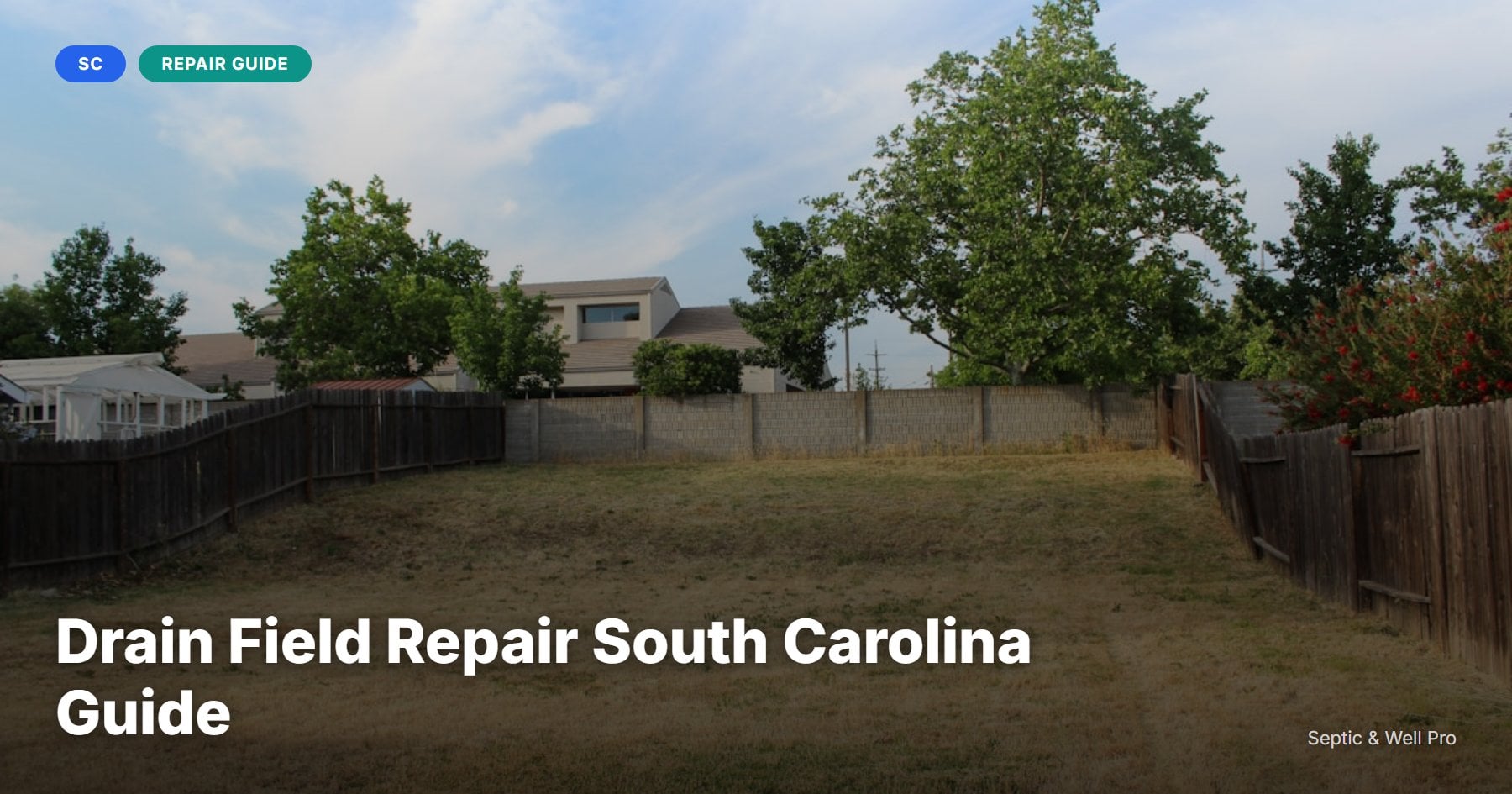
Drain Field Repair South Carolina Guide
Drain field repair south carolina costs $2,000 to $15,000. Spot failure signs, compare repair vs replacement, and learn SCDES rules.
Recognizing the need for drain field repair south carolina homeowners face early can save you thousands of dollars and prevent a full system replacement. Drain fields — also called leach fields — are the final treatment stage of your septic system, and they eventually wear out or fail due to soil compaction, biomat buildup, tree root intrusion, or system overloading. This guide helps SC homeowners identify failure signs, understand repair options, and navigate the SCDES permit process for drain field work.
South Carolina's varied geology adds complexity to drain field repairs. A failing drain field in Piedmont clay requires a different approach than one in Lowcountry sand. Regional soil conditions, water table depth, and available space on your property all influence whether repair or replacement is the best path forward. Understanding these factors before calling a contractor puts you in a stronger position to make the right decision.
Drain Field Failure Signs SC: What to Watch For
Catching drain field problems early gives you more repair options and lower costs. Here are the warning signs that every SC homeowner should monitor.
Soggy Spots and Standing Water
Persistent wet areas over or near your drain field are the most obvious sign of failure. When the soil can no longer absorb effluent at the rate it is being delivered, wastewater surfaces above ground. In South Carolina's warm climate, this surfacing effluent often has a noticeable odor. If you see wet spots that do not dry out between rain events, your drain field likely needs attention.
Slow Drains Throughout the House
When multiple drains in your home slow down simultaneously, the problem is usually in the septic system rather than individual plumbing. A failing drain field creates back-pressure through the entire system. The septic tank fills up because effluent cannot exit into the saturated drain field, and that full tank prevents wastewater from leaving the house. If snaking individual drains does not help, get your septic system inspected.
Sewage Odor in the Yard
A properly functioning drain field produces no noticeable odor. If you smell sewage near your drain field, effluent is reaching the surface or is too close to the surface for adequate treatment. This smell may be strongest during warm, humid weather — common in South Carolina from April through October — when biological activity increases and gases rise more readily.
Unusually Green or Lush Grass
A strip of grass that is noticeably greener and lusher than the surrounding yard often marks a failing drain field line. The extra nutrients in partially treated effluent act as fertilizer, promoting vigorous growth. While a uniformly healthy lawn over the drain field is normal, distinct stripes of lush grass following the trench lines indicate that effluent is too close to the surface.
Well Water Contamination
If your annual well water test shows elevated coliform bacteria or nitrates, a failing drain field may be the source. This is especially concerning in areas with sandy soils where contamination can travel quickly through the ground. If well contamination is detected, have your septic system inspected immediately and contact SCDES.
Drain Field Repair South Carolina: Repair Methods
Several repair techniques can restore a failing drain field without full replacement. The right method depends on the cause and extent of the failure.
Aeration and Fracturing
Terralift and similar pneumatic fracturing systems inject compressed air into the soil around the drain field. This breaks up compacted soil and biomat, restoring permeability and drainage. The process takes a few hours and costs $2,000 to $5,000 in South Carolina. Aeration works best when the drain field has failed due to soil compaction or moderate biomat buildup rather than structural problems with the distribution system.
This method is particularly effective in Piedmont clay soils where compaction is a common failure cause. The fracturing creates channels that allow effluent to reach fresh soil. Results are typically visible within days as standing water recedes and drainage improves.
Chemical and Biological Treatments
Several products claim to dissolve the biomat layer that forms at the trench-soil interface and causes many drain field failures. Hydrogen peroxide-based treatments can break down organic matter in the biomat. Bacterial additives introduce aggressive waste-digesting organisms into the soil. These treatments cost $500 to $2,000 and can be effective for early-stage biomat problems.
However, chemical treatments are not a permanent solution if the underlying cause (such as system overloading or inadequate tank pumping) is not corrected. They work best as part of a comprehensive repair plan that includes reducing water flow to the drain field and establishing a regular pumping schedule.
Lateral Line Repair
When a specific section of the drain field fails while other sections continue to function, repairing or replacing individual lateral lines may be sufficient. This involves excavating the failed section, replacing crushed or clogged pipes, and potentially adding new gravel or chamber sections. Costs range from $1,500 to $5,000 depending on the extent of damage and accessibility.
Lateral line repair is common when tree roots have invaded a specific trench, when heavy equipment has driven over and crushed a section of pipe, or when a localized soil issue (such as a clay lens) affects one line but not others.
Leach Field Repair South Carolina: When to Replace
Sometimes repair is not feasible, and full drain field replacement is the only option. Replacement is typically necessary when the entire drain field has failed, the biomat is too thick for treatment, the distribution system has collapsed, or the original system was undersized for current use.
Full drain field replacement costs in South Carolina range from $5,000 to $15,000 for conventional systems and up to $30,000 for engineered alternatives. The cost depends heavily on the replacement system type, which SCDES determines based on a new site evaluation of the designated repair area.
| Repair vs Replace Factor | Favor Repair | Favor Replacement |
|---|---|---|
| Failure extent | Localized to 1-2 lines | Entire field affected |
| System age | Under 15 years | Over 25 years |
| Failure cause | Compaction, roots, minor biomat | Structural collapse, severe biomat |
| Repair area available | Not relevant | Must have suitable repair area |
| Cost comparison | $1,500–$5,000 | $5,000–$15,000+ |
SCDES Drain Field Repair Permit Process
Any significant drain field repair south carolina homeowners undertake requires a permit from SCDES. Minor repairs like replacing a distribution box or fixing a single broken pipe may not require a permit, but any work involving the drain field trenches or a change in system type requires SCDES approval.
The repair permit process follows the same general steps as a new installation permit. You submit an application to SCDES, a site evaluation is conducted (or existing records are reviewed), and SCDES determines the appropriate system type for the repair. For full permit details, see our South Carolina septic permit guide.
Emergency repairs are handled differently. If sewage is surfacing and creates an immediate health hazard, SCDES can issue an emergency repair authorization that allows work to begin before the standard permit is processed. Contact your regional SCDES office immediately if you have a sewage surfacing emergency.
SC Drain Field Replacement Cost: Regional Breakdown
Replacement costs vary across South Carolina based on soil conditions and the type of replacement system required.
| SC Region | Conventional Replacement | Alternative System Replacement | Primary Challenge |
|---|---|---|---|
| Piedmont | $7,000–$12,000 | $15,000–$30,000 | Clay soil limits options |
| Sandhills | $5,000–$8,000 | $10,000–$18,000 | Groundwater protection |
| Coastal Plain | $5,000–$10,000 | $10,000–$20,000 | Variable soil conditions |
| Lowcountry | $6,000–$10,000 | $12,000–$25,000 | High water table |
The Piedmont region has the highest replacement costs because clay soils often require upgrading from a conventional system to an engineered alternative during replacement. Replacement in clay also takes longer because excavation is more difficult and engineered systems require extended installation times.
In the Lowcountry, high water tables are the primary challenge. Many older systems installed before current regulations may not meet modern setback requirements for water table clearance. Replacements in these areas often require mound or ATU systems to achieve adequate vertical separation. For more on common failure signs, see our South Carolina septic system failure signs guide.
Preventing Drain Field Failure in South Carolina
Preventing the need for drain field repair south carolina wide is always cheaper than fixing a failed system. These practices extend your drain field's life regardless of which SC region you live in.
Pump your septic tank on schedule — every 3 to 5 years. A full tank sends solids into the drain field, which clogs the soil and destroys the distribution system. This is the single most common cause of preventable drain field failure in South Carolina.
Conserve water to reduce the hydraulic load on your drain field. Fix leaks promptly. Install high-efficiency fixtures. Space out laundry loads throughout the week. A family of four should keep daily water use below 60 gallons per person to avoid overloading a standard system.
Keep trees and shrubs at least 30 feet from the drain field. Willow, maple, and poplar trees are aggressive root invaders that will find and destroy drain field pipes. In South Carolina's growing climate, roots can reach a drain field from surprising distances.
Never drive vehicles or equipment over the drain field. The weight compacts the soil and can crush distribution pipes. Do not build structures, pave, or place heavy objects over the drain field area. And protect the designated repair area — it is your backup plan if the primary field fails.
Choosing a Drain Field Repair Contractor in SC
When hiring a contractor for drain field repair south carolina homeowners should verify credentials carefully. The contractor must hold a current SCDES installer permit for the type of repair being performed. Ask for references from recent repair projects in your area and verify their insurance coverage. A reputable contractor will inspect the entire system before recommending specific repairs, not just the drain field.
Get at least two written quotes that detail the scope of work, materials, timeline, and warranty. Repair quotes should include an assessment of the failure cause so you know whether the repair will be a permanent fix or a temporary solution. If tree roots caused the damage, the quote should include root removal or barrier installation to prevent recurrence. Ask about the warranty period for the repair work — most reputable contractors offer at least a one-year warranty on drain field repairs.
Find qualified repair professionals through our South Carolina septic and well water directory and browse drain field repair services statewide.
Frequently Asked Questions
How much does drain field repair cost in South Carolina?
Drain field repair costs in SC range from $500 for chemical treatments to $5,000 for aeration or lateral line repair. Full replacement costs $5,000 to $15,000 for conventional systems and up to $30,000 for engineered alternatives. The repair method and cost depend on the cause and extent of failure. Get at least two quotes from licensed professionals before proceeding.
Can a drain field be repaired or does it always need replacement?
Many failing drain fields can be repaired without full replacement. Aeration, chemical treatment, and lateral line repair are all viable options when the failure is localized or caused by compaction or moderate biomat buildup. Full replacement is necessary when the entire field has failed, the distribution system has collapsed, or the soil is permanently damaged. A professional inspection determines which approach is appropriate.
How long does a drain field last in South Carolina?
A well-maintained drain field in SC typically lasts 25 to 30 years. In sandy Sandhills soils, some systems last even longer. In heavy Piedmont clay, drain fields may have shorter lifespans of 15 to 25 years. The biggest factors affecting lifespan are regular septic tank pumping, water conservation, avoiding physical damage to the field, and keeping tree roots away from the distribution system.
Do I need a SCDES permit to repair my drain field?
Most drain field repairs require a SCDES permit. Minor repairs like replacing a distribution box may not need a permit, but any work involving the drain field trenches, adding new laterals, or changing the system type requires SCDES approval. Emergency repairs for sewage surfacing events can begin under an emergency authorization before the standard permit is processed. Contact your regional SCDES office to confirm requirements for your specific situation.
Find South Carolina providers
Connect with local professionals in South Carolina for your septic or well water needs.
Related reading
 city-guide
York County Septic Guide: Charlotte Metro Growth
York county septic systems in the Charlotte metro face rapid growth and Piedmont clay soils. Permits, costs, and Rock Hill services.
 city-guide
Summerville Dorchester County Septic SC Guide
Summerville dorchester county septic systems face unique challenges in the Charleston metro tri-county area. Permits, soil, and costs.
 city-guide
Anderson County Septic & Well Water Guide for SC
Anderson county septic systems face Piedmont red clay challenges near Lake Hartwell. Permits, costs, well water quality, and local SCDES requirements explained.