Hilton Head Septic Services & Beaufort SC Guide
Hilton head septic services face unique coastal challenges from tidal influence and saltwater intrusion. Beaufort County permits and costs.
Hilton head septic services must contend with some of the most challenging environmental conditions for onsite wastewater treatment anywhere in the southeastern United States. Hilton Head Island and the surrounding Beaufort County communities sit on low-lying barrier islands and coastal plains where the water table often sits within 12 to 24 inches of the surface, tidal fluctuations push groundwater levels up and down twice daily, and saltwater intrusion threatens private wells. For the thousands of residential and vacation properties that rely on septic systems and wells in this premier resort destination, finding qualified, experienced hilton head septic services providers is essential.
Beaufort County encompasses Hilton Head Island, the city of Beaufort, Port Royal, Bluffton, and the rapidly growing areas along the Highway 278 corridor. The entire county sits within the Lowcountry geological region, where Coastal Plain sediments, tidal marshes, and marine clay deposits define the subsurface conditions. The South Carolina Department of Environmental Services (SCDES) Lowcountry Regional Office oversees all septic permitting and well construction in the area, applying regulations under R.61-56 for wastewater and R.61-71 for wells that must account for the region's extreme environmental constraints.
Beaufort County Septic: Coastal Challenges
The beaufort county septic landscape is dominated by three factors that make conventional septic systems impractical or impossible on many properties: high water tables, tidal influence, and poor soil drainage. Understanding these challenges helps homeowners and builders make informed decisions about system selection and maintenance.
High water tables are the primary constraint for septic systems throughout Beaufort County. On Hilton Head Island, the seasonal high water table is typically 12 to 36 inches below the surface, with many areas seeing groundwater within 12 inches during wet periods. Regulation 61-56 requires a minimum of 24 inches of vertical separation between the bottom of the drain field and the seasonal high water table for conventional systems — a requirement that eliminates conventional gravity systems on much of the island.
Tidal influence adds another layer of complexity. Groundwater levels on Hilton Head and throughout the coastal portions of Beaufort County rise and fall with the tides, which can create a difference of 2 to 4 feet in water table elevation between high and low tide cycles. This daily fluctuation means that a drain field that functions adequately at low tide may be partially submerged at high tide, compromising treatment and potentially causing effluent surfacing. System designs must account for worst-case (high tide) water table conditions.
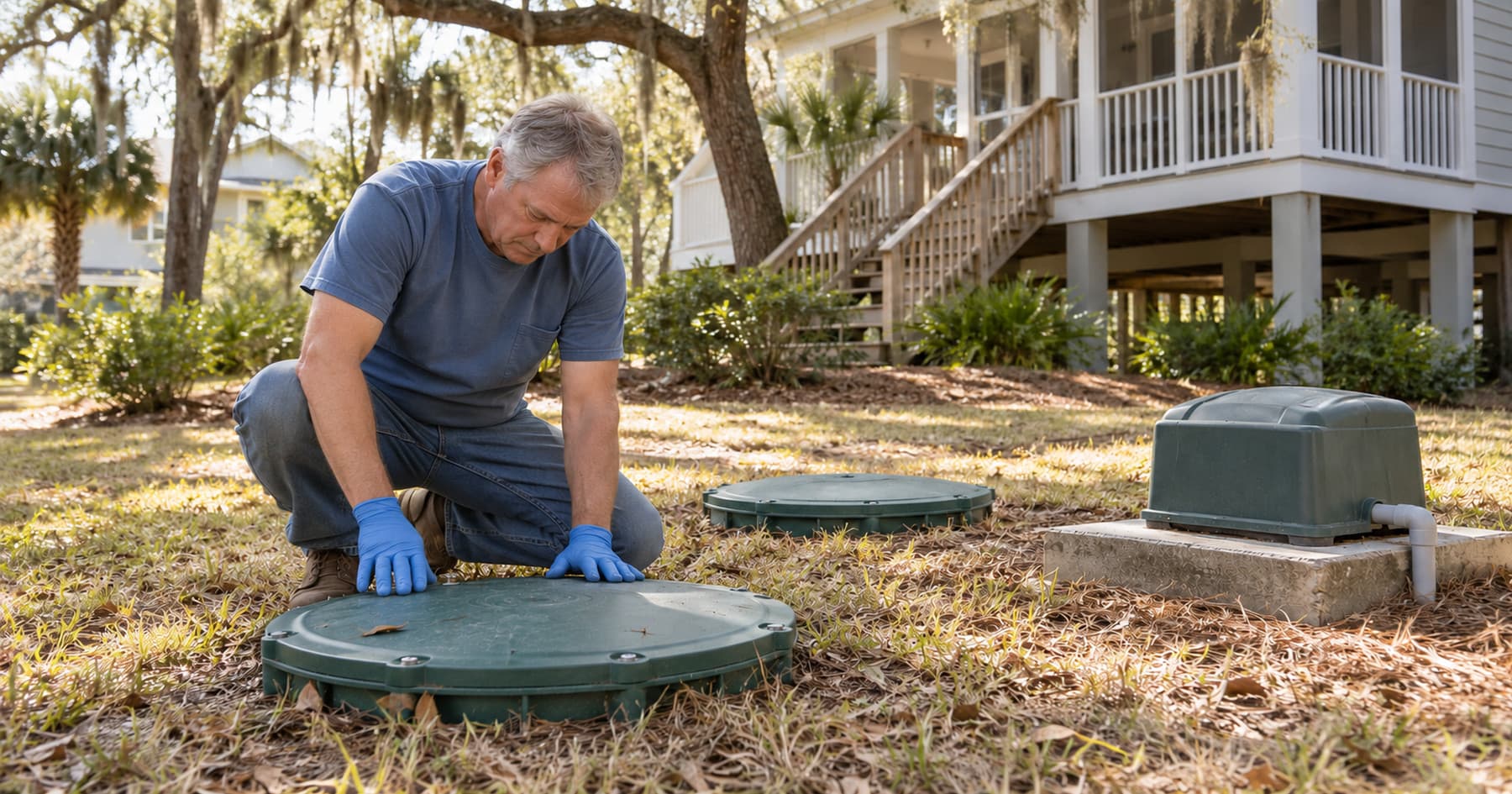
These constraints have made aerobic treatment units (ATUs) the predominant system type on Hilton Head Island and in coastal Beaufort County. ATUs produce a higher quality effluent that can be surface-applied or spray-irrigated, reducing the need for deep soil treatment. The prevalence of ATU systems on the barrier islands means that beaufort county septic maintenance requirements are more demanding than in inland areas, with mandatory quarterly inspections and service contracts.
Hilton Head Well Water and Saltwater Intrusion
Hilton head well water presents unique challenges due to the island's geology and proximity to the Atlantic Ocean and Calibogue Sound. Private wells on Hilton Head draw from the shallow surficial aquifer or the deeper Floridan aquifer system. Both sources face potential contamination from saltwater intrusion, a process where ocean water migrates into freshwater aquifers due to over-pumping or natural tidal forces.
The Beaufort-Jasper Water and Sewer Authority (BJWSA) provides public water to most developed areas of Hilton Head Island, reducing reliance on private wells. However, some older properties, outlying areas, and golf course communities still depend on private wells. These well owners should be particularly vigilant about water quality monitoring.
Saltwater intrusion is monitored through a network of sentinel wells maintained by the USGS and SCDES. Signs of saltwater intrusion in your private well include increasing chloride levels (above 250 mg/L), rising total dissolved solids, and a brackish or salty taste. If you suspect saltwater intrusion, have your water tested immediately and consult with a hydrogeologist about well modifications or alternative water sources.
Beyond salinity, hilton head well water may contain elevated iron, manganese, hydrogen sulfide (rotten egg smell), and tannins from organic matter in the shallow aquifer. These aesthetic issues, while not health hazards, require appropriate treatment systems. Iron and manganese filters, carbon filters for hydrogen sulfide, and water softeners are common treatment installations for Hilton Head properties.
Hilton Head Septic Services for Resort and Vacation Properties
Hilton Head Island's status as a premier resort destination creates unique challenges for hilton head septic services providers and property owners alike. Vacation rental properties experience highly variable occupancy patterns — a property may sit empty for weeks, then host a full family for peak-season vacation, generating surges of wastewater that stress the system.
ATU systems are particularly sensitive to these occupancy swings. The biological treatment process in ATUs depends on a consistent supply of organic material to feed the bacterial colonies. Extended periods of non-use allow the bacteria to die off, reducing treatment effectiveness when the property is suddenly occupied again. Vacation property owners should discuss occupancy patterns with their ATU maintenance provider and consider timer-operated dosing systems that spread wastewater application more evenly.
Beaufort County also requires that short-term rental properties comply with all applicable health and safety regulations, including septic system maintenance. Property managers should include septic system guidelines in their rental agreements — instructing guests not to flush wipes, feminine products, or excessive food waste — and ensure that the maintenance contract is current and inspections are up to date.
For resort properties considering connection to BJWSA sewer service, this option eliminates septic maintenance concerns entirely but involves significant connection fees and may require property association approval. Finding reliable hilton head septic services providers who understand vacation property needs is essential. Browse our Beaufort County septic and well directory for service providers experienced with resort and vacation properties.
Lowcountry Septic Services SC: Regulations and Permits
The lowcountry septic services SC landscape is shaped by SCDES regulations that account for the region's extreme environmental conditions. Permit requirements in Beaufort County are among the most stringent in the state, reflecting the sensitivity of the coastal ecosystem and the challenges posed by high water tables and tidal influence.
For new septic system installations, the permitting process begins with a detailed site evaluation that must demonstrate adequate soil conditions, water table clearance, and setback distances. In Beaufort County, many properties require engineered system designs prepared by licensed professional engineers with specific experience in coastal wastewater systems. The engineering design adds $2,000 to $5,000 to the project cost but ensures the system is properly sized and configured for the site's unique conditions.
System costs in the Beaufort County area reflect the prevalence of advanced treatment systems. Conventional systems (where permitted) cost $5,000 to $8,000. LPP systems range from $9,000 to $14,000. ATU systems, which represent the majority of new installations on Hilton Head Island, cost $15,000 to $25,000 installed plus $200 to $400 annually for mandatory maintenance contracts. Drip irrigation systems, used on the most challenging sites, can exceed $20,000 to $30,000.
Coastal environmental regulations add additional permitting layers for properties near tidal marshes, beaches, and critical habitat areas. The SC Office of Ocean and Coastal Resource Management (OCRM) may require additional permits for construction activities within the coastal zone. Work with contractors experienced in Beaufort County permitting to navigate these overlapping jurisdictions.
Marine Corps Air Station Beaufort: Water Quality Impacts
Marine Corps Air Station (MCAS) Beaufort, located in the northern portion of the county, has been the subject of environmental investigations related to PFAS contamination from historical use of AFFF (aqueous film-forming foam) in firefighting training. Properties near the air station should be aware of potential PFAS contamination in groundwater and consider PFAS testing for private wells.
The Department of Defense has conducted groundwater testing around MCAS Beaufort and identified PFAS contamination in some monitoring wells. If your property is within 3 miles of the air station and uses a private well, testing for PFAS compounds is recommended. For detailed information about PFAS contamination risks in South Carolina, see our coastal South Carolina septic crisis guide.
Preparing for Hurricanes and Tropical Storms
Beaufort County's coastal location makes hurricane preparedness essential for septic system owners. Tropical storms and hurricanes bring storm surge, heavy rainfall, and prolonged flooding that can overwhelm septic systems and contaminate wells. Pre-season preparation and post-storm response protocols protect both your system and your health.
Before hurricane season (June 1 through November 30), have your septic tank pumped to create maximum capacity for storm-related water influx. Secure tank access lids, check backup power options for ATU systems (which require electricity to operate), and document your system layout in case repairs are needed. After a hurricane, do not use your septic system until floodwaters have fully receded and the drain field is no longer saturated. Have your well water tested for coliform bacteria before resuming use.
For comprehensive hurricane preparation guidance for septic and well systems, see our South Carolina hurricane season septic and well preparation guide.
Frequently Asked Questions
Can I install a conventional septic system on Hilton Head Island?
In most cases, no. The high water table and tidal influence on Hilton Head Island typically prevent the installation of conventional gravity-fed septic systems, which require a minimum of 24 inches of vertical separation between the drain field bottom and the seasonal high water table. Most new installations on the island use aerobic treatment units (ATUs), low-pressure pipe systems, or drip irrigation systems. A site evaluation by SCDES will determine which system types are feasible for your specific property.
How much does an ATU system cost on Hilton Head Island?
Aerobic treatment units on Hilton Head Island typically cost $15,000 to $25,000 for residential installations, including the treatment unit, pump tanks, drain field or spray field, and all permitting and installation costs. Annual maintenance contracts run $200 to $400 and are mandatory under SCDES regulations. More complex sites with very high water tables or limited space may require drip irrigation systems costing $20,000 to $30,000. These costs are higher than inland areas due to the engineering requirements of coastal installations.
Is Hilton Head well water safe to drink?
Most developed areas of Hilton Head Island receive public water from the Beaufort-Jasper Water and Sewer Authority, which meets all federal and state drinking water standards. Properties with private wells should have their water tested annually for bacteria, nitrates, and chloride (to monitor for saltwater intrusion). Additional testing for iron, manganese, and pH helps guide treatment decisions. Well water in the Hilton Head area is generally safe when properly tested and treated, but ongoing monitoring is essential due to saltwater intrusion risks.
Do vacation rental properties need special septic maintenance?
Yes. Vacation rental properties experience irregular usage patterns that stress septic systems, particularly ATU systems that depend on consistent biological activity. Rental property owners should maintain active ATU service contracts with quarterly inspections, provide guests with clear septic system usage guidelines (no wipes, no grease, no excessive water use), and schedule pumping more frequently than typical residential properties. Property management companies in the Hilton Head area are experienced with these requirements and can coordinate maintenance schedules.
Find South Carolina providers
Connect with local professionals in South Carolina for your septic or well water needs.
Get free quotesRelated reading
 city-guide
Best Septic Companies Christiansburg VA (2026)
Top septic companies Christiansburg VA homeowners trust for pumping, inspections, and repair. Montgomery County tips and pricing.
 city-guide
York County Septic Guide: Charlotte Metro Growth
York county septic systems in the Charlotte metro face rapid growth and Piedmont clay soils. Permits, costs, and Rock Hill services.
 city-guide
Best Septic Companies Mechanicsville VA (2026)
Find the best septic companies Mechanicsville VA has for pumping, inspections, and drain field repair. Hanover County tips and pricing.