
Coastal SC Septic Crisis: Lowcountry Homeowner Guide
The coastal SC septic crisis threatens Lowcountry homes with failing systems and rising water tables. Solutions for homeowners.
The coastal SC septic crisis is no longer a future concern — it is happening right now across the Lowcountry. Thousands of onsite wastewater systems in Charleston, Beaufort, Horry, and Georgetown counties are failing or operating at the edge of failure as rising sea levels, increasing rainfall intensity, and rapid population growth combine to overwhelm systems that were never designed for today's conditions. For homeowners in the affected areas, understanding this crisis is essential for protecting your property value, your family's health, and your financial future.
South Carolina's coast has experienced 10 inches of sea-level rise since 1950, and the rate is accelerating. Current projections indicate the coast is now gaining roughly 1 inch of sea-level rise every 2 years, a pace that will push many existing septic systems past their functional limits within the next decade. The combination of rising groundwater, tidal influence on the water table, and saturated soils is creating conditions where septic systems literally cannot treat wastewater before it reaches the environment.
What Is Causing the Coastal SC Septic Crisis?
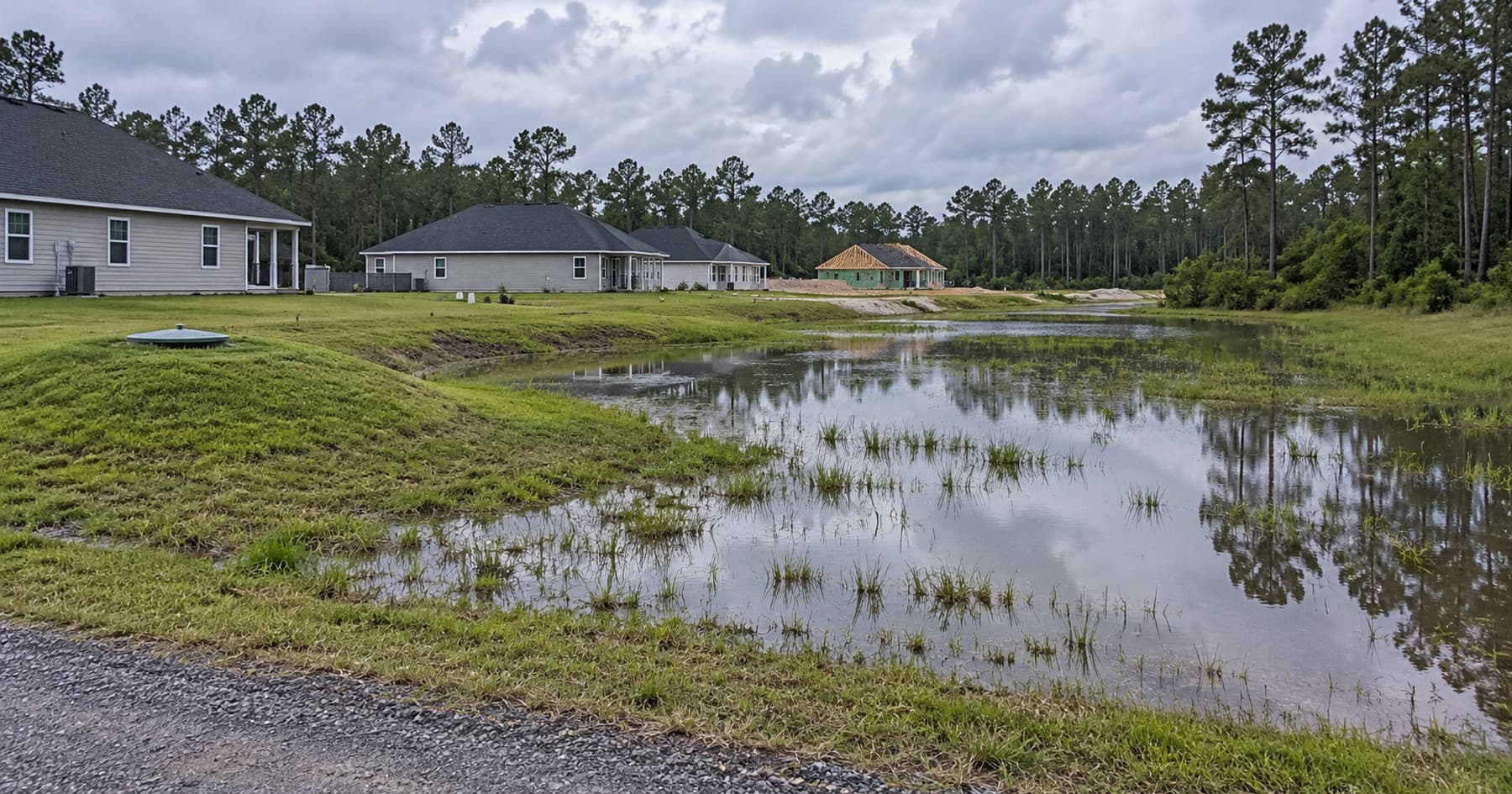
Septic systems work through a simple process: wastewater flows from the home into a tank where solids settle out, and then liquid effluent moves into a drain field where soil bacteria break down remaining contaminants. This process requires an unsaturated zone of soil between the drain field and the water table. When that unsaturated zone disappears, treatment stops and untreated sewage enters the groundwater, nearby waterways, and sometimes surfaces in yards.
In the Lowcountry, several factors are converging to eliminate this critical unsaturated zone:
- Sea-level rise: Pushes the baseline water table higher across all coastal areas, reducing the vertical separation that existing systems were designed around.
- Tidal influence: The water table in coastal areas rises and falls with the tides. During king tides and storm surges, the water table can temporarily rise to within inches of the ground surface, completely saturating drain fields.
- Increased rainfall: Climate data shows South Carolina's coast is receiving more intense rainfall events. When heavy rain coincides with high tides, drainage systems are overwhelmed and water tables spike.
- Aging systems: Many coastal septic systems were installed 30 to 50 years ago when water tables were lower and regulations were less stringent. These systems are now operating far outside their design parameters.
- Population growth: Rapid development in coastal counties is adding thousands of new septic systems while simultaneously reducing the permeable land area that helps manage stormwater and groundwater.
Impact Areas: Where the Crisis Is Worst
The coastal SC septic crisis affects properties throughout the Lowcountry, but some areas face particularly acute challenges.
Charleston County: James Island, Johns Island, and Wadmalaw Island
Charleston County has been at the epicenter of the crisis, with multiple lawsuits filed over failing septic systems and contaminated waterways. James Island, Johns Island, and Wadmalaw Island are among the hardest-hit areas, where thousands of homes rely on aging septic systems installed in soils with chronically high water tables. During king tides and heavy rain events, raw sewage has been documented surfacing in yards and flowing into tidal creeks.
The City of Charleston has adopted a sewer preference ordinance that essentially requires new development to connect to the municipal sewer system when service is available within a defined distance. For homeowners in areas where sewer extension is planned, this ordinance can be a lifeline, but the timeline for sewer expansion is measured in years, not months. In the meantime, failing systems continue to pollute.
Charleston County has also invested in studies to identify the most vulnerable areas and prioritize sewer extension. However, the cost of extending sewer infrastructure to barrier islands and rural areas is enormous, and many homeowners face years of waiting for a permanent solution.
Beaufort County: Hilton Head and the Sea Islands
Beaufort County has implemented one of the most proactive approaches to the lowcountry septic problems through mandatory septic inspection programs. The county requires periodic inspections of all onsite systems in certain areas, particularly on Hilton Head Island and the surrounding Sea Islands. These inspections have revealed widespread issues including systems that are technically functional but operating with minimal vertical separation.
Hilton Head Island's unique geology presents extreme challenges. The island sits on sandy soils over clay and ancient marine deposits, with the water table often within 24 inches of the surface. Development density on the island is high, with many homes on lots that would not receive septic permits under current standards. The combination of aging systems, high density, and minimal vertical separation creates ongoing contamination risks for the island's waterways and nearshore environment.
Horry County: Myrtle Beach and the Grand Strand
Horry County is the fastest-growing county in South Carolina, with annual population growth of approximately 3.8%. This explosive growth along the Grand Strand is straining existing infrastructure and creating new septic challenges. Many developments in unincorporated Horry County rely on individual septic systems because municipal sewer service has not kept pace with growth.
The county's flat terrain and shallow water tables make conventional septic systems marginal in many areas. New subdivisions are being permitted with engineered systems, but the sheer volume of new construction means that SCDES permitting offices are overwhelmed. Inspections during construction may not be as thorough as they should be, and some systems are being installed in conditions that will likely cause problems within 10 to 15 years as the water table continues to rise.
Georgetown County: Edisto Beach and Rural Coast
Georgetown County faces a different dimension of the crisis. Rural coastal communities along the Waccamaw Neck and in areas south of Georgetown rely heavily on septic systems, and many of these communities lack the tax base to fund sewer extension. Edisto Beach, partially in Charleston and Colleton counties, has documented significant septic failure issues during storm events.
SC Coastal Septic Failure: County Regulations and Responses
South Carolina counties have responded to the coastal SC septic crisis with varying levels of urgency and effectiveness. Understanding your county's specific regulations is critical for homeowners.
| County | Key Regulations | Notes |
|---|---|---|
| Charleston | Sewer preference ordinance; system upgrade requirements on failure | Sewer extension planned for islands but timeline uncertain |
| Beaufort | Mandatory inspection programs; ATU requirements in sensitive areas | Most proactive county in the state |
| Horry | Enhanced permitting for new systems in high-growth areas | Struggling to keep pace with development |
| Berkeley | 2-year warranty requirement for new installations | Protects buyers of new construction |
| Dorchester | Standard SCDES regulations | Sewer expanding from Summerville corridor |
Berkeley County's 2-year warranty requirement deserves special attention. This provision requires that the installer of a new septic system guarantee its performance for two years after installation. If the system fails during this period, the installer must repair or replace it at no cost to the homeowner. This unique protection does not exist in most other SC counties and provides meaningful security for buyers of new construction in Berkeley County.
Coastal SC Septic Crisis Solutions for Homeowners
If you own property in the affected areas, you have several options depending on your specific situation and budget.
Upgrading to an Advanced Treatment Unit
ATUs provide a higher level of wastewater treatment than conventional septic tanks, producing effluent that is cleaner and safer for dispersal in high-water-table environments. An ATU upgrade typically costs $8,000 to $15,000 and requires an annual maintenance contract ($200 to $400 per year). ATUs can extend the life of a failing system by reducing the treatment burden on the drain field, but they are not a permanent solution if the water table continues to rise above the drain field level.
Mound System Installation
For properties where the water table is too high for any in-ground system, a mound system elevates the drain field above the natural grade using imported fill material. Mound systems for coastal SC properties typically cost $12,000 to $20,000 and require significant yard space. They are effective but visually prominent and require careful landscaping to manage stormwater drainage around the mound.
Connecting to Municipal Sewer
Where available, connecting to municipal sewer is the most permanent solution to charleston septic system issues and coastal septic challenges generally. Connection costs vary widely from $5,000 to $30,000 depending on the distance to the sewer main, the depth of the connection, and whether road or easement work is required. Monthly sewer bills range from $40 to $80 in most Lowcountry jurisdictions.
Cost of Upgrading a Failing Coastal System
The total cost of addressing a failing coastal septic system depends on the solution chosen and the site conditions. Here is a general breakdown.
| Solution | Cost Range | Ongoing Costs |
|---|---|---|
| ATU upgrade (keep existing drain field) | $8,000–$15,000 | $200–$400/year maintenance |
| New mound system | $12,000–$20,000 | Standard pumping every 3–5 years |
| ATU + mound combination | $15,000–$25,000 | $200–$400/year + pumping |
| Sewer connection (where available) | $5,000–$30,000 | $40–$80/month sewer bill |
What to Do If Your Coastal System Is Failing
If you suspect your septic system is failing — signs include wet spots in the yard, slow drains, sewage odors, or lush green grass over the drain field during dry periods — take these steps immediately:
- Stop using water unnecessarily: Reduce laundry, shorten showers, and fix any leaking fixtures. Every gallon that enters the system adds to the hydraulic load on the failing drain field.
- Have the tank pumped: This buys time by removing accumulated solids and reducing the volume of effluent reaching the drain field. Cost is typically $300 to $500 in the Lowcountry.
- Contact SCDES: Report the failure and discuss your options. SCDES will need to issue a repair permit, and their guidance on system type will be based on current site conditions.
- Get multiple contractor quotes: Septic repair in the Lowcountry is specialized work. Get at least three quotes from contractors experienced with coastal installations.
- Check for sewer availability: Before investing $15,000 or more in a new septic system, verify whether sewer extension is planned for your area. Your county public works department can provide this information.
The coastal SC septic crisis is a slow-moving environmental and financial challenge that will affect property values, insurance availability, and quality of life for thousands of Lowcountry homeowners in the coming decade. Proactive assessment and planning are far less expensive than emergency repairs. Find qualified septic professionals and inspectors through our South Carolina services directory.
Learn more about SC septic challenges in our soil types and septic guide, review septic failure warning signs, and check hurricane season preparation tips.
Frequently Asked Questions
How do I know if my coastal septic system is at risk?
Any septic system within 5 miles of the South Carolina coast is potentially at risk, particularly if it was installed more than 20 years ago. Specific risk factors include properties on barrier islands, properties within flood zones, areas with documented tidal influence on the water table, and systems installed without mound or ATU technology. Beaufort County's mandatory inspection program has found that many systems that appear to be functioning are actually operating with dangerously low vertical separation.
Does homeowner insurance cover septic system failure?
Standard homeowner insurance policies in South Carolina typically do not cover septic system repair or replacement. Some policies may cover damage caused by a septic failure (such as sewage backup into the home) but not the cost of fixing the system itself. Flood insurance also generally does not cover septic systems. Consider budgeting for a system replacement fund if you own coastal property with a septic system.
Can I sell my home with a failing septic system in South Carolina?
South Carolina does not require a septic inspection for home sales at the state level, but most lenders require one for financing. If your system is failing, you will likely need to disclose this to buyers, and it will significantly impact your sale price. Many buyers' attorneys will require a functional system as a condition of closing. Fixing the system before listing is almost always more cost-effective than negotiating a price reduction.
What is the sewer preference ordinance in Charleston?
Charleston's sewer preference ordinance requires new development to connect to the municipal sewer system when service is available within a certain distance of the property. This applies primarily to new construction and major renovations, not to existing homes with functioning septic systems. However, if your existing system fails and sewer is available, you may be required to connect rather than install a new septic system. Contact Charleston Water System for current distance requirements and availability.
Find South Carolina providers
Connect with local professionals in South Carolina for your septic or well water needs.
Get free quotesRelated reading
 state-guide
Well Drilling Depth South Carolina by Region
Well drilling depth south carolina ranges 30–400+ feet by region. Piedmont, Sandhills, Coastal Plain, and Lowcountry depths compared.
 cost
costSeptic System Cost in Minnesota (2026): Trench, Mound, and ATG Prices
Septic system cost in Minnesota runs $12,000 to $45,000 installed. See trench, mound, and at-grade prices by system type, soil, and county permit fees.
 city-guide
Horry County Septic Challenges: Growth & Flooding
Horry county septic systems face flooding, rapid growth, and high water tables near Myrtle Beach. Challenges and solutions covered.