Hurricane Septic Well Preparation South Carolina
Hurricane septic well preparation south carolina homeowners need before storm season. Pre-storm checklist and recovery steps.
On this page (26)
Hurricane septic well preparation south carolina homeowners undertake before each storm season can mean the difference between a minor inconvenience and a catastrophic contamination event. South Carolina's hurricane season runs from June 1 through November 30, and the state's 187-mile coastline, low-lying Lowcountry terrain, and extensive river systems make it one of the most hurricane-vulnerable states in the Southeast. For the approximately 40% of South Carolina homes that rely on septic systems and private wells, hurricanes and tropical storms pose unique risks that public sewer and water customers never face.
This guide provides a complete hurricane preparation, response, and recovery plan for South Carolina homeowners with onsite wastewater systems and private water wells. Whether you live in the flood-prone Lowcountry, the river corridors of the Midlands, or the Upstate where remnant storms can still dump 10+ inches of rain, these steps will help you protect your systems and your family's health.
Hurricane Septic Well Preparation in South Carolina: Understanding the Risks
Hurricanes and tropical storms create three specific hazards for septic systems and private wells that do not affect homes connected to municipal utilities.
Flooding and Saturated Drain Fields
The most immediate risk is flooding. When floodwaters rise above the level of your septic system drain field, the system cannot function because the soil is fully saturated. Effluent from the septic tank has nowhere to go, causing the tank to fill and potentially back up into the house. Even without direct flooding, the sustained heavy rainfall from a hurricane can saturate soils to the point where the drain field cannot accept any additional effluent. In the Lowcountry, where seasonal high water tables are already within 12 to 24 inches of the surface, hurricane rainfall can raise water tables above the drain field level within hours.
Well Water Contamination
Floodwaters carry a concentrated mix of bacteria, chemicals, petroleum products, pesticides, and sewage from overwhelmed municipal and private wastewater systems. When floodwaters inundate a well — particularly older wells with compromised seals, damaged well caps, or inadequate grouting — these contaminants can enter the well and contaminate the aquifer. Even wells that are not directly inundated can be affected if floodwaters infiltrate through the annular space around the casing or through surface pathways to the aquifer.
Physical Damage to System Components
Hurricane-force winds can topple trees onto drain fields, crushing distribution pipes and compacting the soil. Storm surge can scour soil from around septic tanks, exposing and displacing them. Debris carried by floodwaters can damage well heads, electrical connections, and pump equipment. In extreme events, entire septic tanks have been lifted out of the ground by rising water tables and storm surge, especially fiberglass and lightweight concrete tanks that were not adequately backfilled.
South Carolina Storm Septic Damage Prevention: Pre-Storm Checklist
The time to prepare your septic system and well for a hurricane is before the storm arrives. Ideally, these steps should be completed at the start of hurricane season in June, with additional action when a specific storm threatens your area.
Septic System Pre-Storm Preparation
- Keep septic maintenance on schedule: Arrange routine pumping when due and when soil and groundwater conditions are suitable, well before a storm threatens. A working septic tank normally contains liquid; its liquid level alone does not show that pumping is due. Do not empty the tank as a last-minute precaution when flooding or saturated conditions are expected. See our South Carolina septic pumping cost guide for current pricing.
- Secure tank lids and risers: Inspect all tank access lids and risers for cracks, gaps, or loose fittings. Floodwaters can enter the tank through loose lids, overwhelming the system with clean water and potentially introducing contaminants. Ensure lids are securely fastened and waterproof. Consider bolting or locking lids if your system is in a flood-prone area.
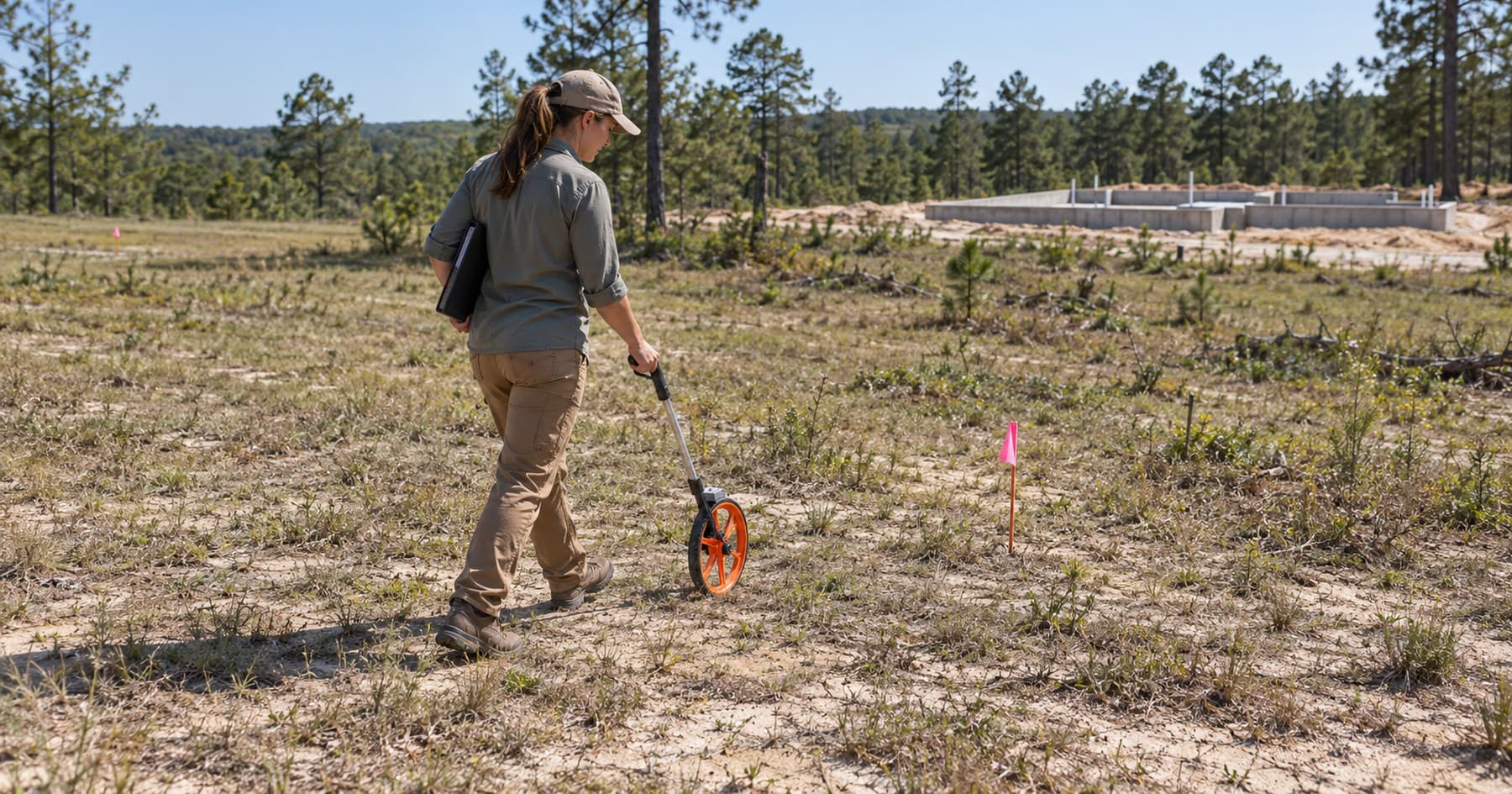
- Mark system components: Use flags, stakes, or GPS coordinates to mark the location of your septic tank, distribution box, and drain field boundaries. After a storm, the landscape may be altered by debris, erosion, or standing water, making it difficult to locate system components for inspection.
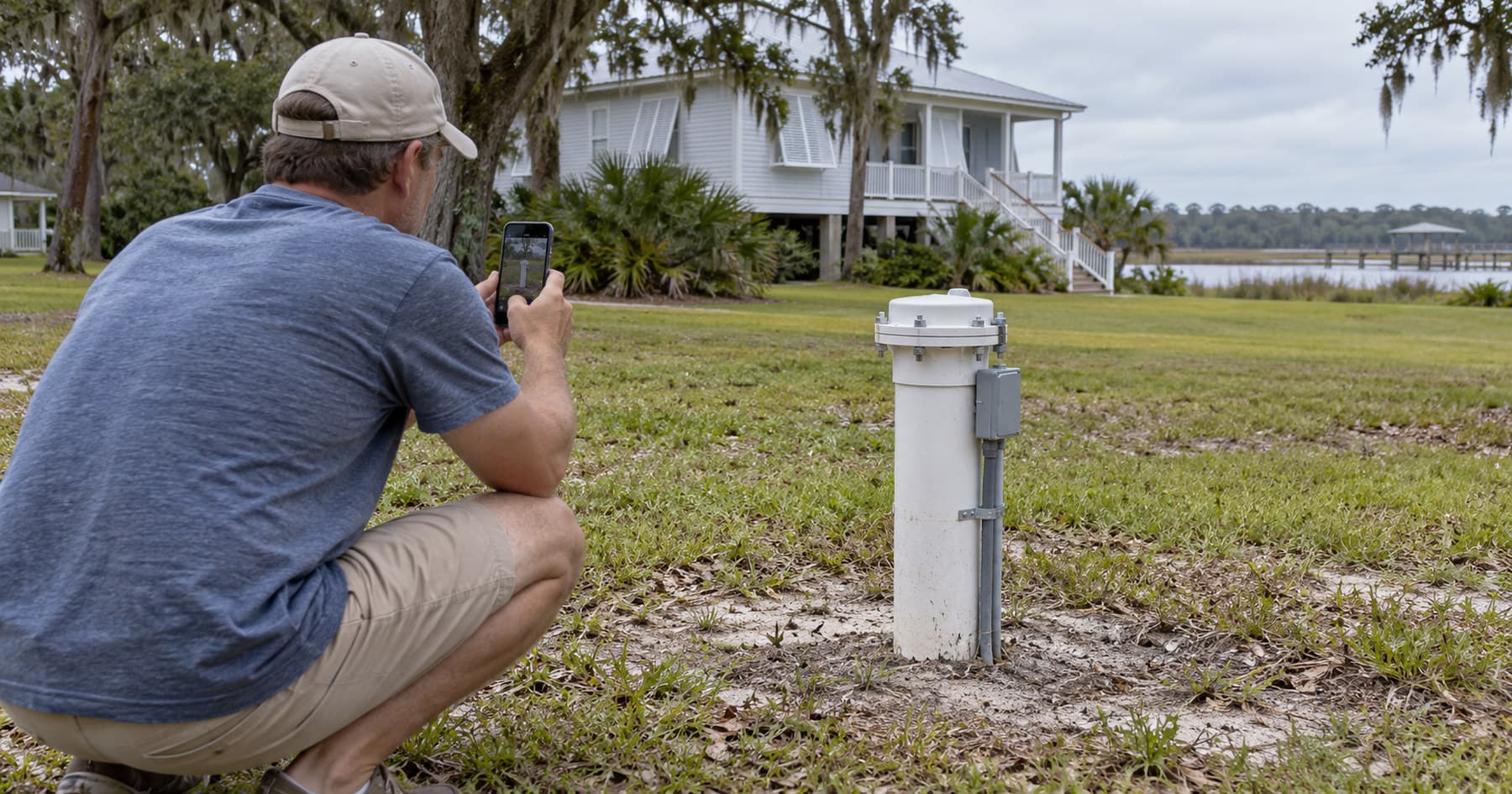
- Document your system: Photograph your septic system components, yard conditions, and any visible infrastructure before the storm. This documentation is invaluable for insurance claims and FEMA assistance applications if damage occurs.
- Turn off the pump (if applicable): If your system uses a pump to distribute effluent (LPP, ATU, or mound systems), turn off the pump when flooding is imminent. Pumping effluent into a saturated drain field accelerates failure and can cause surface breakouts of untreated sewage.
Well System Pre-Storm Preparation
- Inspect the well cap and seal: Verify that the well cap is securely in place, undamaged, and properly sealed. The well cap is the primary barrier between your water supply and surface contamination. Replace any damaged or deteriorated caps before storm season.
- Check the electrical disconnect: Know where the well pump circuit breaker is located so you can shut off power to the pump if flooding threatens the well head or electrical connections. Running a pump that has been submerged can damage the motor and create electrical hazards.
- Store emergency water: Fill clean containers with enough drinking water for your household for at least 7 days. FEMA recommends one gallon per person per day. If your well becomes contaminated, you may not be able to use it for days or weeks while testing and treatment are completed.
- Stock water treatment supplies: Keep unscented household bleach (5.25% to 8.25% sodium hypochlorite) on hand for emergency water disinfection and well shocking after the storm.
- Verify well elevation: If your well head is at or below the expected flood elevation for your area, consider installing a temporary waterproof well cap or sanitary seal to prevent floodwater entry. Your county emergency management office can provide flood elevation maps for your area.
During the Storm: What to Do While It Is Happening
Stop Using the Septic System if Flooding Occurs
If your property floods or you observe standing water over your drain field, stop using your septic system immediately. This means minimizing water use — no laundry, dishwashing, long showers, or unnecessary flushing. Every gallon of water you send to the septic system during a flood event adds to the problem. The saturated drain field cannot process effluent, so additional water either backs up into the house, surfaces on the lawn, or forces untreated sewage into the floodwaters.
Do Not Use Well Water if the Well Has Been Flooded
If floodwaters have reached the well head or if you suspect the well seal has been compromised, do not use the well water for drinking, cooking, or bathing until it has been tested. Use your stored emergency water supply. Even if the water looks clear, it may contain harmful bacteria, viruses, or chemical contaminants that are invisible and odorless.
Shut Off Power to the Well Pump
If flooding reaches or approaches the well head, shut off the circuit breaker for the well pump. Submersion can damage the pump motor, pressure switch, and electrical connections. Running a pump with flooded electrical components creates an electrocution hazard and can cause irreparable equipment damage.
Post-Storm Recovery: Steps After the Hurricane Passes
The recovery process after a hurricane involves a systematic approach to assessing damage, restoring safe water supply, and returning your septic system to operation.
Step 1: Wait for Floodwaters to Recede
Do not attempt to inspect, pump, or repair your septic system or well while floodwaters are still present. Working around floodwaters is dangerous due to submerged hazards, contamination, and electrical risks. Wait until floodwater and high groundwater recede and the soil is no longer saturated before a qualified professional opens, pumps, or repairs the system.
Step 2: Test Your Well Water
Before using your well water after a hurricane, have it tested for bacteria (total coliform and E. coli) at a minimum. SCDES and local health departments often provide free or reduced-cost testing after major storm events. If bacteria are detected, the well must be shocked (disinfected) with chlorine and retested. Do not use the water for drinking or cooking until tests confirm it is safe. For comprehensive testing guidance, see our South Carolina well water quality guide.
Step 3: Inspect the Drain Field
Walk the drain field area once it is safe to do so, looking for signs of damage: standing sewage, saturated soil, sinkholes, exposed pipes, or strong odors. If trees fell on the drain field, the root systems may have damaged distribution pipes or compacted the soil. Document any damage with photographs for insurance and FEMA purposes.
Step 4: Watch for Contamination Signs
In the weeks following a hurricane, monitor your well water for changes in taste, color, or odor. Even after initial testing shows safe results, gradual contamination can occur as floodwaters percolate through the soil toward the aquifer. Consider retesting your well water 30 and 60 days after the storm to confirm ongoing safety.
Step 5: Resume Septic System Use Gradually
Do not resume use while the tank area or drain field remains flooded or saturated. After floodwater and high groundwater recede, have a qualified professional assess any damage and whether the system can safely resume operation. Avoid heavy water use for the first several days. Run laundry and dishwashers only as needed, take short showers, and fix any leaking fixtures. The drain field needs time to dry out and resume normal soil absorption before it can handle a full household's wastewater load.
Flood Damage Assessment: When to Call SCDES
Contact SCDES if you observe any of the following conditions after a hurricane:
- Sewage surfacing on your property or a neighbor's property
- Your septic tank has been displaced or exposed by floodwaters
- The drain field has been scoured, eroded, or covered with debris
- Your well was submerged and repeated disinfection does not resolve contamination
- You suspect contamination from a nearby commercial or industrial source
SCDES regional offices coordinate post-storm response and can send inspectors to assess damage, authorize emergency repairs, and provide guidance on system restoration. After major hurricanes, SCDES often sets up temporary field offices in affected areas to expedite permit processing for repairs. For your nearest office, see the SCDES regional office guide.
Insurance and FEMA Considerations
Standard homeowner's insurance policies typically do not cover septic system damage from flooding. Flood insurance, available through the National Flood Insurance Program (NFIP) or private insurers, may cover some septic and well damage, but coverage varies by policy. Review your policy before hurricane season to understand what is and is not covered.
After a federally declared disaster, FEMA's Individual Assistance program may provide grants for essential home repairs, including septic system and well repairs. FEMA assistance is typically available only when other insurance does not cover the damage. To qualify, you must register with FEMA, document the damage, and demonstrate that the damage was caused by the declared disaster. Keeping pre-storm photographs of your systems in good condition strengthens your application.
Lowcountry-Specific Advice: Tidal Surge and Coastal Flooding
Homeowners in the Lowcountry — Charleston, Beaufort, Dorchester, Berkeley, Jasper, and Colleton counties — face additional risks from tidal storm surge that inland areas do not experience. Storm surge can push saltwater miles inland, flooding properties that are far from the beach.
Saltwater intrusion into a septic system drain field can temporarily or permanently damage the soil's ability to treat effluent. The sodium in saltwater disperses clay particles, destroying the soil structure that the drain field depends on for treatment. In severe cases, the drain field may need to be replaced after saltwater flooding — a cost that can exceed $15,000 to $30,000.
For wells, saltwater intrusion can contaminate the aquifer, making the water too salty for domestic use. Shallow Coastal Plain wells are most vulnerable. If saltwater enters your well, the aquifer may need months or years to flush naturally, or the well may need to be deepened or relocated to access water below the saltwater intrusion zone. Monitoring chloride levels in your well water after storm surge events is essential for Lowcountry homeowners.
The Coastal South Carolina septic crisis has already pushed many Lowcountry systems to their limits. Adding hurricane damage to an already stressed system can create long-term problems that require major investment to resolve.
Thorough hurricane septic well preparation south carolina residents undertake before each storm season significantly reduces damage and recovery costs. Starting your hurricane septic well preparation south carolina checklist early gives time to address existing system vulnerabilities before conditions deteriorate. Professional hurricane septic well preparation south carolina services are available through licensed contractors who understand regional storm-related risks to onsite systems.
Be prepared year-round with our septic failure signs guide, learn about the coastal SC septic crisis, and review SC well water quality standards.
Frequently Asked Questions
Should I pump my septic tank before a hurricane?
Do not pump solely because a hurricane is approaching. Keep routine pumping on schedule when conditions are suitable, well before a storm threatens. If flooding or saturated conditions are expected or already present, do not empty the tank; it can shift or float. Reduce water use and ask a qualified septic professional about safe timing.
Is my well water safe to drink after a hurricane?
Do not assume your well water is safe after a hurricane, even if it looks and tastes normal. Have it tested for bacteria before using it for drinking or cooking. If your well was submerged by floodwaters, it should be shocked with chlorine and tested before use. SCDES and local health departments often provide free testing after major storms. Use stored water or commercially bottled water until test results confirm safety.
How long does it take for a septic drain field to recover after flooding?
Recovery time depends on the duration and depth of flooding, soil type, and weather after the storm. In well-drained sandy soils (typical of parts of the Coastal Plain), recovery may take 1 to 2 weeks. In clay soils (common in the Piedmont and parts of the Midlands), recovery can take 3 to 6 weeks or longer. During recovery, minimize water use and avoid heavy loads on the system. If the drain field has not recovered after 6 weeks, contact SCDES or a licensed septic professional.
Does FEMA cover septic system damage from hurricanes?
FEMA may provide assistance for septic system repairs after a federally declared disaster, but only when homeowner's insurance and flood insurance do not cover the damage. FEMA assistance is grant-based, not a loan, and covers essential repairs needed to make the home habitable. Document all damage with photographs and keep receipts for any emergency repairs. Register with FEMA as soon as possible after the disaster declaration.
Can saltwater from storm surge permanently damage my septic system?
Yes. Saltwater intrusion can permanently damage the soil structure in your drain field by dispersing clay particles, which destroys the soil's ability to filter and treat effluent. Shallow drain fields in the Lowcountry are most vulnerable. If your drain field was flooded with saltwater, have a licensed professional assess the soil condition. In severe cases, the drain field may need to be relocated or rebuilt. Browse our South Carolina septic and well water directory for qualified professionals in your area.
Find South Carolina providers
Connect with local professionals in South Carolina for your septic or well water needs.
Get free quotesRelated reading
 how-to
Septic System Freezing in Minnesota: Prevention, Thawing, and Winter Rules
Septic system freezing in Minnesota hits idle systems and bare-ground winters. See what freezes, why snow is your best insulation, and fixes.
 state-guide
South Carolina Well Permit and NOI Requirements
A south carolina well permit requires a Notice of Intent (NOI) filed before drilling and an LLR-licensed driller with a $25,000 surety bond. Complete guide to SC well permitting.
 city-guide
Greenville County Septic Rules and Regulations
Greenville county septic rules require a 1.5-acre minimum lot, SCDES permits, and site evaluations in Piedmont clay soils.