South Carolina Well Water Quality by Region
South carolina well water quality varies dramatically by region. Learn what contaminants to test for in the Upstate, Sandhills, Coastal Plain, and Lowcountry, plus where to get tested.
Approximately 444,000 South Carolina households rely on private wells for their drinking water, representing roughly 20% of the state's population. Unlike public water systems, these private wells are not monitored by any government agency. The responsibility for testing and maintaining south carolina well water quality falls entirely on the homeowner. What makes this particularly challenging in South Carolina is that water quality varies dramatically by region, and the contaminants you need to test for in the Upstate are completely different from those that threaten wells in the Lowcountry.
South Carolina's geological diversity means that private wells tap into fundamentally different aquifer systems depending on where they are located. A well in Greenville County draws from fractured crystalline rock formed hundreds of millions of years ago, while a well in Horry County draws from sandy sediments deposited when the area was underwater. Each aquifer type has its own natural chemistry and its own vulnerability to specific contaminants. Understanding your regional water quality profile is the first step toward protecting your family's health.
Upstate and Piedmont Well Water Quality
The Upstate, encompassing Greenville, Spartanburg, Anderson, Oconee, Pickens, and Cherokee counties, sits on fractured crystalline rock aquifers. Wells in this region are typically drilled to depths of 100 to 400 feet, penetrating through weathered clay soil and into the underlying gneiss, granite, or schist bedrock. Water enters the well through fractures in the rock, and the yield depends entirely on how many fractures the drill intersects.
The primary south carolina well water quality concerns in the Piedmont region include:
- Iron and manganese: The most common aesthetic contaminants in Upstate wells. Iron causes red-orange staining of fixtures and laundry, while manganese creates black staining. Neither is a health hazard at typical levels, but they make water unpleasant to use. Treatment involves oxidation filters or water softeners, typically costing $800 to $2,500 for whole-house systems.
- Radon: This radioactive gas occurs naturally in granite bedrock and can dissolve into groundwater. Radon in well water contributes to indoor air radon levels when water is used for showering and cooking. The EPA has proposed a maximum contaminant level of 300 pCi/L for radon in water, and many Upstate wells exceed this level. Aeration systems ($1,500 to $3,500) are the most effective treatment.
- Low pH: Piedmont groundwater tends to be slightly acidic, with pH values of 5.5 to 6.5. Acidic water corrodes copper plumbing and can leach lead from older solder joints and brass fixtures. A calcite neutralizer ($500 to $1,200) raises pH to safe levels and protects plumbing.
- Variable yields: Fractured rock aquifers can have inconsistent water production. Some wells produce abundant water while a neighbor's well 100 feet away may barely produce enough for a household. Droughts can significantly reduce yields in shallow wells.
Sandhills Well Water Quality
The Sandhills region, running through Chesterfield, Kershaw, Richland, Lexington, and Aiken counties, has deep sandy aquifers that generally produce high-quality, abundant water. Wells are typically 100 to 300 feet deep and tap into thick sand formations that provide excellent natural filtration. Water quality in the Sandhills is generally the best in the state for private wells.
However, the Sandhills have one significant concern: naturally occurring radium. The ancient coastal sediments that form the Sandhills concentrated radioactive minerals, and wells in this region frequently show elevated levels of radium-226 and radium-228. The combined EPA standard for radium is 5 pCi/L, and some Sandhills wells exceed this level. Radium is a bone-seeking radioactive element that increases cancer risk with long-term exposure.
Other SC well water testing considerations for the Sandhills include:
- Nitrates: The sandy soils that provide good drainage for septic systems also allow agricultural runoff and septic effluent to reach groundwater more easily. Wells near agricultural operations or in areas with dense septic system development should be tested for nitrates annually.
- Pesticides: Agricultural chemicals can travel through sandy soils to reach the aquifer. Properties near active farmland or former agricultural sites should include a pesticide screen in their testing program.
Coastal Plain Well Water Quality
The Coastal Plain covers the eastern two-thirds of South Carolina, from the Fall Line to within about 30 miles of the coast. This is the Pee Dee region, the heart of the Midlands, and the agricultural center of the state. Wells tap into a series of sand and limestone aquifers at varying depths, generally producing reliable water supplies with moderate to good quality.
Key south carolina private well testing priorities for the Coastal Plain include:
- Nitrates from agriculture: The Pee Dee region is South Carolina's most intensive agricultural area, with significant tobacco, cotton, soybean, and corn production. Agricultural nitrate contamination is a documented concern, particularly for shallow wells less than 100 feet deep. Wells near concentrated animal feeding operations (CAFOs) face additional risk from animal waste runoff.
- Hardness: Limestone formations in parts of the Coastal Plain contribute calcium and magnesium to groundwater, creating hard water. While not a health concern, hard water causes scale buildup in pipes and water heaters, spots on dishes, and reduced soap effectiveness. Water softeners ($800 to $2,000) address this issue.
- Fluoride: Some Coastal Plain aquifers contain naturally occurring fluoride at levels above the EPA's 4 mg/L standard. Excessive fluoride can cause dental and skeletal fluorosis with long-term exposure. Reverse osmosis systems effectively remove fluoride.
- Hydrogen sulfide: The "rotten egg" smell in some Coastal Plain wells comes from hydrogen sulfide gas produced by sulfate-reducing bacteria. While typically not a health hazard, the odor makes water unusable without treatment. Aeration, oxidation filters, or chlorination systems ($500 to $2,000) eliminate the problem.
Lowcountry Well Water Quality
The Lowcountry, from Georgetown through Beaufort and Jasper counties, presents the most complex well water quality challenges in South Carolina. Shallow aquifers in this region are vulnerable to multiple contamination sources, and the proximity to the coast introduces unique threats that inland wells never face.
- Saltwater intrusion: This is the defining well water quality SC issue for the Lowcountry. As sea levels rise and groundwater is pumped for irrigation and domestic use, saltwater migrates inland and upward into freshwater aquifers. Hilton Head Island and parts of Beaufort County have documented saltwater intrusion that has rendered some shallow wells unusable. Deep wells (300+ feet) that tap into the Floridan aquifer system are generally protected from intrusion but are more expensive to drill.
- PFAS contamination: Military installations along the coast, including Joint Base Charleston and the former Myrtle Beach Air Force Base, used firefighting foam containing PFAS (per- and polyfluoroalkyl substances). These "forever chemicals" have contaminated groundwater in surrounding areas. Any well within 3 miles of a current or former military installation should be tested for PFAS. See our detailed guide on PFAS in South Carolina well water.
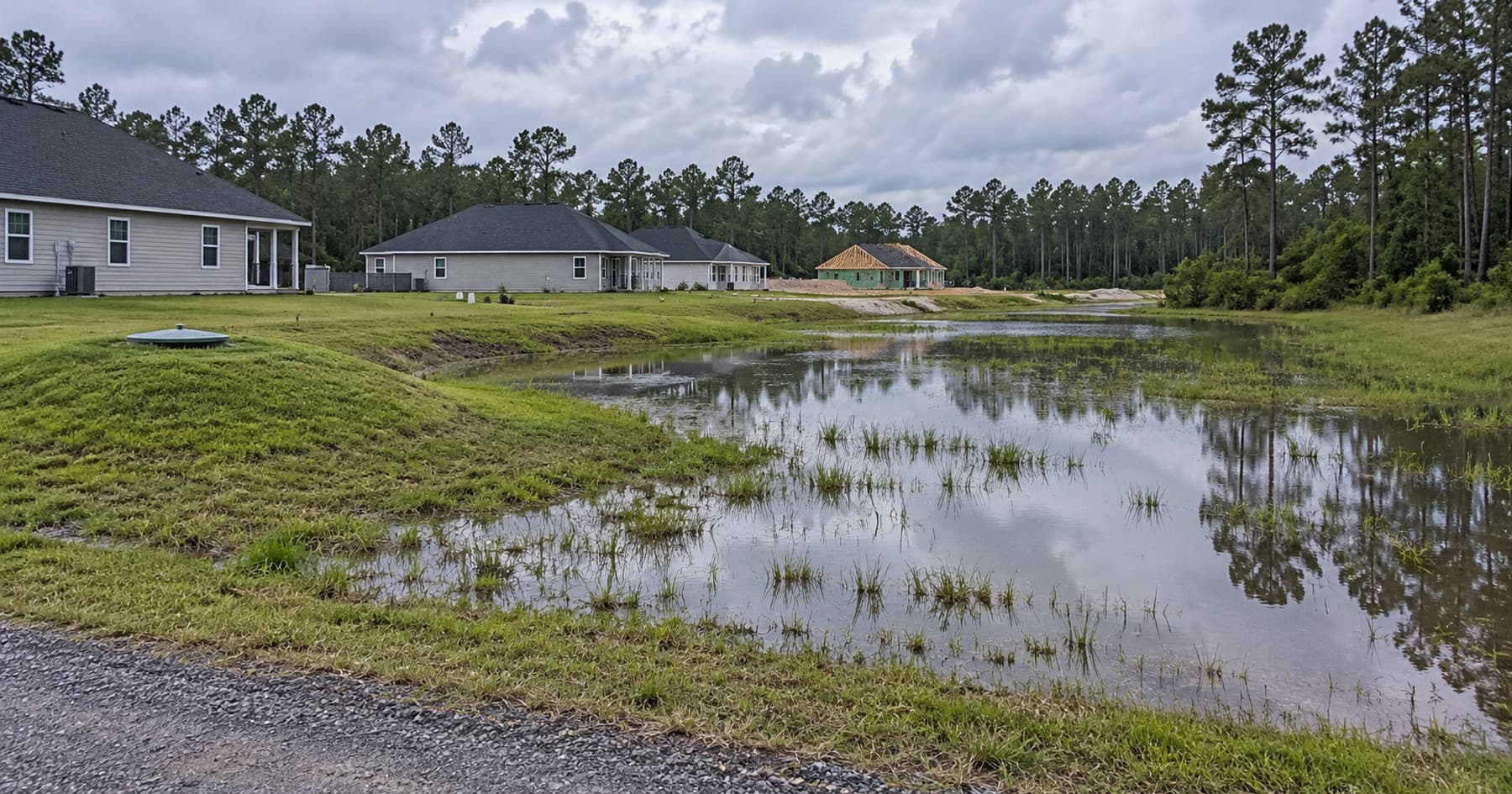
- Bacteria: Shallow wells in the Lowcountry are vulnerable to bacterial contamination from surface water infiltration, particularly after heavy rains and during flooding events. Annual coliform testing is essential, and wells in flood-prone areas should be tested after every significant flood event.
- Turbidity: Shallow wells in sandy coastal soils can produce turbid (cloudy) water, especially after heavy rainfall or during high water table conditions. Sediment filters address this issue but may need frequent replacement in areas with very fine sand.
Recommended Testing by Region
Based on the regional water quality profiles above, here is what every SC private well owner should test for based on their location.
| Test | Upstate/Piedmont | Sandhills | Coastal Plain | Lowcountry |
|---|---|---|---|---|
| Coliform bacteria | Annual | Annual | Annual | Annual + after floods |
| Nitrates | Annual | Annual | Annual | Annual |
| pH | Every 3 years | Every 3 years | Every 3 years | Every 3 years |
| Iron/Manganese | Every 3 years | Not typically needed | Every 3 years | Not typically needed |
| Radon | Once (baseline) | Not typically needed | Not typically needed | Not typically needed |
| Radium | Not typically needed | Once (baseline) | Not typically needed | Not typically needed |
| PFAS | If near industry | If near military | If near military/industry | If near military base |
| Chloride/Conductivity | Not typically needed | Not typically needed | Not typically needed | Every 3 years |
| Pesticides | If near farms | If near farms | If near farms | If near farms |
Testing Costs and Where to Get Tested
Well water testing costs in South Carolina range from $50 for a basic bacteria screen to $500 or more for comprehensive panels that include PFAS analysis.
| Test Type | Cost Range | What It Includes |
|---|---|---|
| Basic bacteria | $50–$100 | Total coliform, E. coli |
| Standard panel | $100–$175 | Bacteria, nitrates, pH, hardness, iron, manganese |
| Comprehensive panel | $150–$275 | Standard plus fluoride, sulfate, arsenic, lead, copper |
| PFAS panel | $200–$500 | 29 to 40 individual PFAS compounds |
| Radionuclide panel | $100–$200 | Radium-226, radium-228, gross alpha/beta |
Where to get your water tested:
- SCDES-certified laboratories: The state maintains a list of certified labs that meet quality standards for drinking water analysis. Use certified labs for all health-related testing.
- County health departments: Some county environmental health offices offer basic well water testing or can refer you to local labs. Contact your county's SCDES regional office for guidance.
- Clemson University: The Clemson Cooperative Extension Service provides water testing information and can help interpret results for homeowners.
- Private testing companies: Many well drilling and water treatment companies offer testing services, but verify that the analysis is performed by a certified laboratory.
LLR Well Construction Standards
South Carolina regulates well construction through the Department of Labor, Licensing and Regulation (LLR) under Regulation R.61-71. These standards specify minimum construction requirements for private wells including casing depth, grouting, well caps, and setback distances from septic systems and other contamination sources. When having a new well drilled, verify that your contractor is licensed by LLR and follows all R.61-71 requirements. Properly constructed wells are significantly less vulnerable to contamination than older or improperly built wells.
Frequently Asked Questions
How often should I test my private well in South Carolina?
At minimum, test for coliform bacteria and nitrates every year. Test for the full panel of regional contaminants every 3 to 5 years or whenever you notice a change in water taste, odor, color, or clarity. Test immediately after any flood event, after well repairs, or after nearby construction or land use changes. The cost of annual testing ($50 to $175) is insignificant compared to the health risks of drinking contaminated water.
Is well water in South Carolina safe to drink without treatment?
Some SC wells produce water that meets all EPA standards without any treatment, particularly deep wells in the Sandhills and Coastal Plain. However, you cannot know whether your water is safe without testing. Many contaminants including bacteria, nitrates, radium, and PFAS have no taste, odor, or color. Never assume your well water quality SC standards are met based on appearance alone.
Who is responsible for private well water quality in South Carolina?
The homeowner is solely responsible for testing, maintaining, and treating private well water in South Carolina. Neither SCDES nor DHEC monitors private wells. The state regulates well construction standards through LLR but does not require ongoing testing. This means your family's water safety depends entirely on your own diligence in testing and maintaining your well system.
What should I do if my well water test shows contamination?
For bacteria: stop drinking the water immediately, use bottled water, and shock chlorinate the well. Retest after 2 weeks. If bacteria returns, investigate the source — it may be a damaged well cap, insufficient casing depth, or nearby contamination source. For chemical contaminants like arsenic, radium, or PFAS: install appropriate treatment systems and retest to confirm effectiveness. For persistent issues, contact your county SCDES office for guidance specific to your area. Find qualified well water professionals through our South Carolina services directory.
Can I test my own well water with a home test kit?
Home test kits are useful for quick screening between professional tests but lack the accuracy and legal standing of certified lab analysis. They cannot detect PFAS at the parts-per-trillion levels required by current EPA standards, and they cannot quantify radionuclides. For real estate transactions, health decisions, and baseline assessments, always use a SCDES-certified laboratory. Home kits are a supplement to, not a substitute for, proper south carolina well water quality testing by certified professionals.
Find South Carolina providers
Connect with local professionals in South Carolina for your septic or well water needs.
Related reading
 state-guide
Well Drilling Depth South Carolina by Region
Well drilling depth south carolina ranges 30–400+ feet by region. Piedmont, Sandhills, Coastal Plain, and Lowcountry depths compared.
 city-guide
Horry County Septic Challenges: Growth & Flooding
Horry county septic systems face flooding, rapid growth, and high water tables near Myrtle Beach. Challenges and solutions covered.
 city-guide
Aiken County Septic & Well Water Guide for SC
Aiken county septic systems benefit from sandy Sandhills soils but face radium risks in well water. Costs, permits, and SRS concerns.