how-toMinnesota Well Water Testing: What to Test For, When, and Why Arsenic Tops the List
Minnesota well water testing should include arsenic, coliform, and nitrate. MDH's schedule, costs, county labs, and the arsenic problem explained.
1,874 directory listings across 570 counties
Private well owners are responsible for ensuring their water is safe to drink. Health departments recommend annual testing for coliform bacteria and nitrates at minimum, with additional testing for pH, hardness, iron, manganese, and other contaminants based on local geology and land use.
Well water quality can change over time due to seasonal fluctuations, nearby construction, agricultural activity, or aging well components. Regular testing catches problems early, before contaminated water causes health issues for your family.
Certified water testing labs analyze samples for a wide range of contaminants. Many septic and well service companies offer sampling services and can help interpret results and recommend treatment solutions when needed.
how-toMinnesota well water testing should include arsenic, coliform, and nitrate. MDH's schedule, costs, county labs, and the arsenic problem explained.
state-guideFind the best well water testing services NC homeowners trust. Compare certified labs, test packages, costs, and turnaround times.
state-guidePFAS contamination Georgia hotspots include 19 DoD sites, the carpet corridor, and industrial facilities. Map guide for well owners to assess risk.
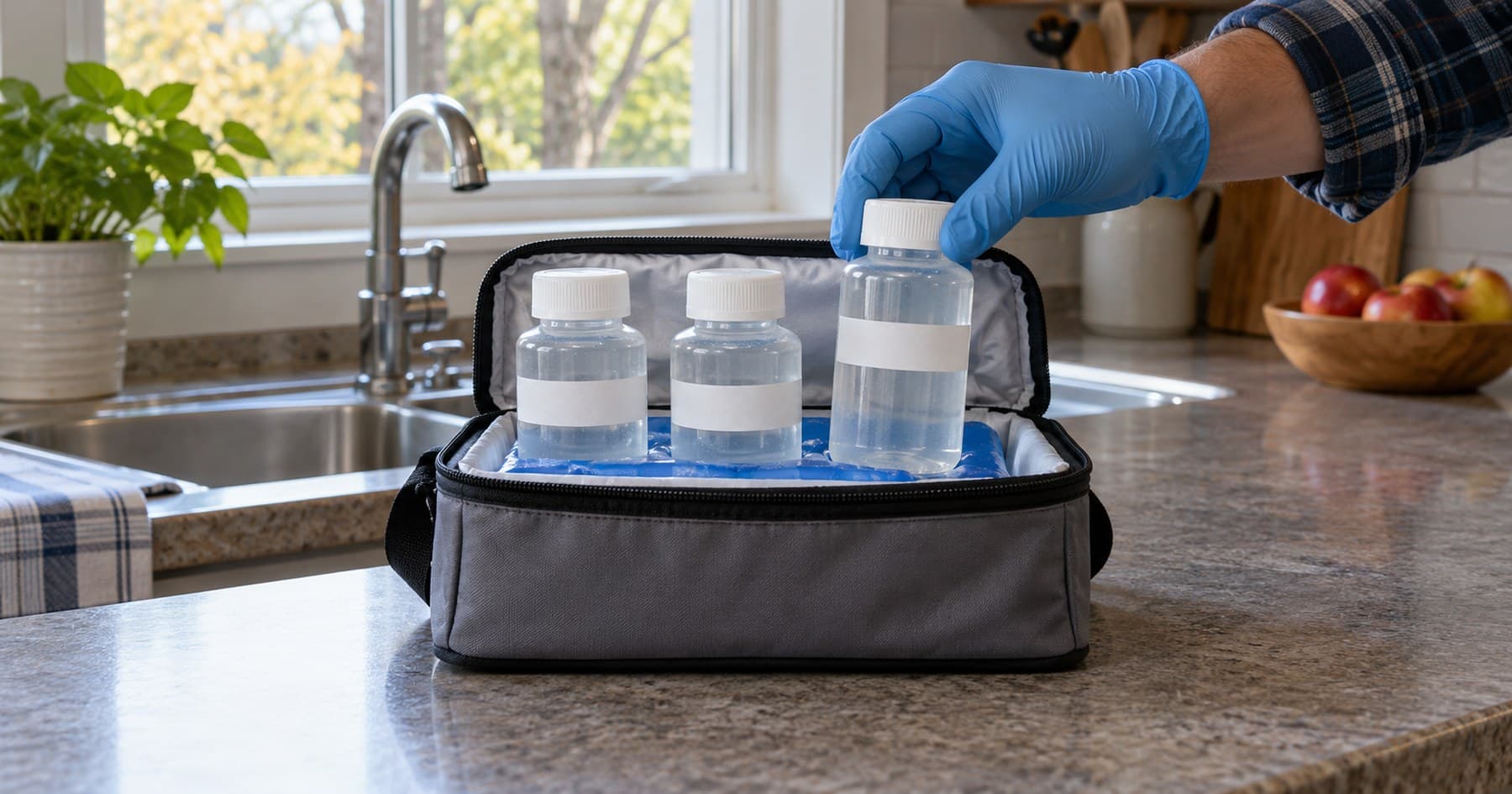
Health departments recommend testing for coliform bacteria and nitrates at least once a year. Test more often — or immediately — after flooding, nearby construction, a change in taste or smell, or if anyone in the home is pregnant.
A basic bacteria-and-nitrate panel runs $50–$150. A comprehensive panel covering metals, PFAS, and other contaminants can run $200–$600 depending on how many compounds are tested. Many providers offer bundled packages.
A basic panel checks total coliform bacteria, E. coli, nitrates, pH, and hardness. Depending on your region, providers may add tests for arsenic, lead, radon, iron, manganese, or PFAS based on known local risks.
Yes, for results that hold up for real estate transactions, mortgage requirements, or health department records. State-certified labs follow standardized collection and analysis methods that DIY kits can't guarantee.
Confirm the lab is state-certified, ask which contaminants are included in the base panel versus add-ons, and check turnaround time. Providers listed here can walk you through choosing the right panel for your area.
Most states require licensing for septic system contractors and well drillers to protect public health and the environment. Ask the business and issuing authority to confirm current licensing, insurance, and the permitted scope of work before hiring.
Get connected with local professionals in your area. Request a free quote today.
Get free quotes