South Carolina Soil Types Septic System Guide
South carolina soil types septic system guide covering Piedmont clay, Sandhills sand, Coastal Plain, and Lowcountry conditions with costs.
Understanding south carolina soil types septic system requirements is essential for any homeowner building, buying, or replacing an onsite wastewater system. South Carolina spans four distinct geological regions, each with radically different soil characteristics that determine which septic system designs will work and how much installation will cost. A system that performs flawlessly in the Sandhills may fail within months if installed in Lowcountry pluff mud, and a conventional gravity system that works in the Coastal Plain may be impossible in Upstate Piedmont clay.
The South Carolina Department of Environmental Services (SCDES), formerly part of DHEC, regulates all onsite wastewater systems in the state. Before any septic system can be permitted, a licensed soil evaluator must conduct a thorough site evaluation including soil borings and percolation testing. The results of that evaluation dictate your system type, size, and ultimately your installation budget.
The Fall Line: Where Piedmont Meets Coastal Plain
The single most important geological feature affecting SC soil septic systems is the Fall Line, a geological boundary that runs diagonally through the state from roughly Aiken through Columbia and into Chesterfield County. Above this line lies the Piedmont region with its ancient metamorphic and igneous bedrock. Below it stretches the Coastal Plain, built from millions of years of marine sediment deposits. Understanding which side of the Fall Line your property sits on is the first step in predicting what your septic installation will involve.
The Fall Line also marks the transition through the Sandhills, a narrow band of deep sandy soils that runs roughly parallel to the boundary. Cities along or near the Fall Line include Columbia, Lexington, Aiken, and Camden. Properties in these transitional areas can have highly variable soil conditions even within a single parcel, making professional site evaluation absolutely critical.
Piedmont Region (Upstate): Red Clay Challenges
The Piedmont covers the northwestern third of South Carolina, including Greenville, Spartanburg, Anderson, Oconee, and Pickens counties. This is the Upstate, and its defining soil characteristic is heavy red clay derived from the weathering of underlying gneiss, granite, and schist bedrock. The dominant soil series in the Piedmont are Cecil, Madison, and Pacolet, all of which share similar properties that make septic installation challenging.
Piedmont clay soils typically have percolation rates between 0.1 and 0.5 inches per hour, well below the 1.0 inches per hour that conventional gravity septic systems prefer. The clay particles are extremely fine, creating a dense matrix that resists water movement. After rain events, these soils can become saturated and remain waterlogged for days. During dry periods, the same clay shrinks and cracks, creating preferential flow paths that bypass the treatment zone entirely.
Because of these slow percolation rates, many Upstate properties require engineered septic systems rather than conventional gravity designs. Common alternatives include:
- Low-Pressure Pipe (LPP) systems: Distribute effluent evenly across a larger drain field area using a pump and small-diameter pipes. This compensates for the slow absorption rate by spreading the hydraulic load over more square footage.
- Mound systems: Build an elevated sand mound above the native clay, creating an artificial treatment zone with better drainage. The effluent is pumped up into the mound where it filters through imported sand before reaching the clay below.
- Drip dispersal systems: Use subsurface drip irrigation tubing to distribute small, precisely metered doses of treated effluent across the soil surface. These require an advanced treatment unit (ATU) to pre-treat the wastewater before dispersal.
Greenville County, the most populous Upstate county, generally requires a minimum of 1.5 acres for properties with both a septic system and private well. This large lot requirement reflects the challenging clay soils and the need for adequate separation between the well and drain field. In some areas with particularly poor soils, even larger lots may be necessary.
Sandhills Region: Ideal Conditions with a Hidden Risk
The Sandhills form a narrow transitional band running through Chesterfield, Kershaw, Richland, Lexington, and Aiken counties. These deep sandy soils are remnants of an ancient coastline, deposited when sea levels were much higher than today. The dominant soil series include Lakeland, Troup, and Candor, all characterized by deep, well-drained sandy profiles that extend 10 feet or more before encountering any restrictive layer.
For septic system design, Sandhills soils are nearly ideal. Percolation rates range from 2 to 6 inches per hour, providing excellent drainage for conventional gravity systems. The deep sandy profile offers ample vertical separation between the drain field and the seasonal high water table. Installation is straightforward, and conventional systems perform reliably for decades with proper maintenance.
However, Sandhills properties face a hidden risk that has nothing to do with septic systems: naturally occurring radium in well water. The ancient coastal deposits that created these sandy soils also concentrated radioactive minerals. Wells drilled into the Sandhills aquifer frequently show elevated radium levels that exceed EPA drinking water standards. If your property is in the Sandhills with a private well, comprehensive water testing including radionuclide analysis is essential. Learn more about regional well water concerns in our South Carolina services directory.
Coastal Plain Septic South Carolina: Variable but Favorable
The Coastal Plain covers the eastern two-thirds of South Carolina, stretching from the Fall Line to the coast. This is a vast region with considerable soil variability, but the general pattern is sandy loam surface soils over clay subsoil layers at varying depths. The Pee Dee region in the northeast, the Midlands around Sumter and Florence, and the central portion of the state all fall within this zone.
Most Coastal Plain soils support conventional gravity septic systems, with percolation rates in the moderate range of 0.5 to 2 inches per hour. The key variable is the depth to the clay restrictive layer and the seasonal high water table. Properties with clay within 36 inches of the surface may need modified designs, while those with deep sandy profiles can use standard installations.
Agricultural activity in the Pee Dee region has altered soil profiles in some areas through decades of plowing, compaction, and chemical application. These disturbed soils may not perform as well as undisturbed profiles, and site evaluations in agricultural areas sometimes reveal unexpected restrictive layers or perched water tables. If you are buying former farmland for a home site, invest in a thorough soil evaluation before committing to the purchase.
Lowcountry: High Water Tables and Tidal Influence
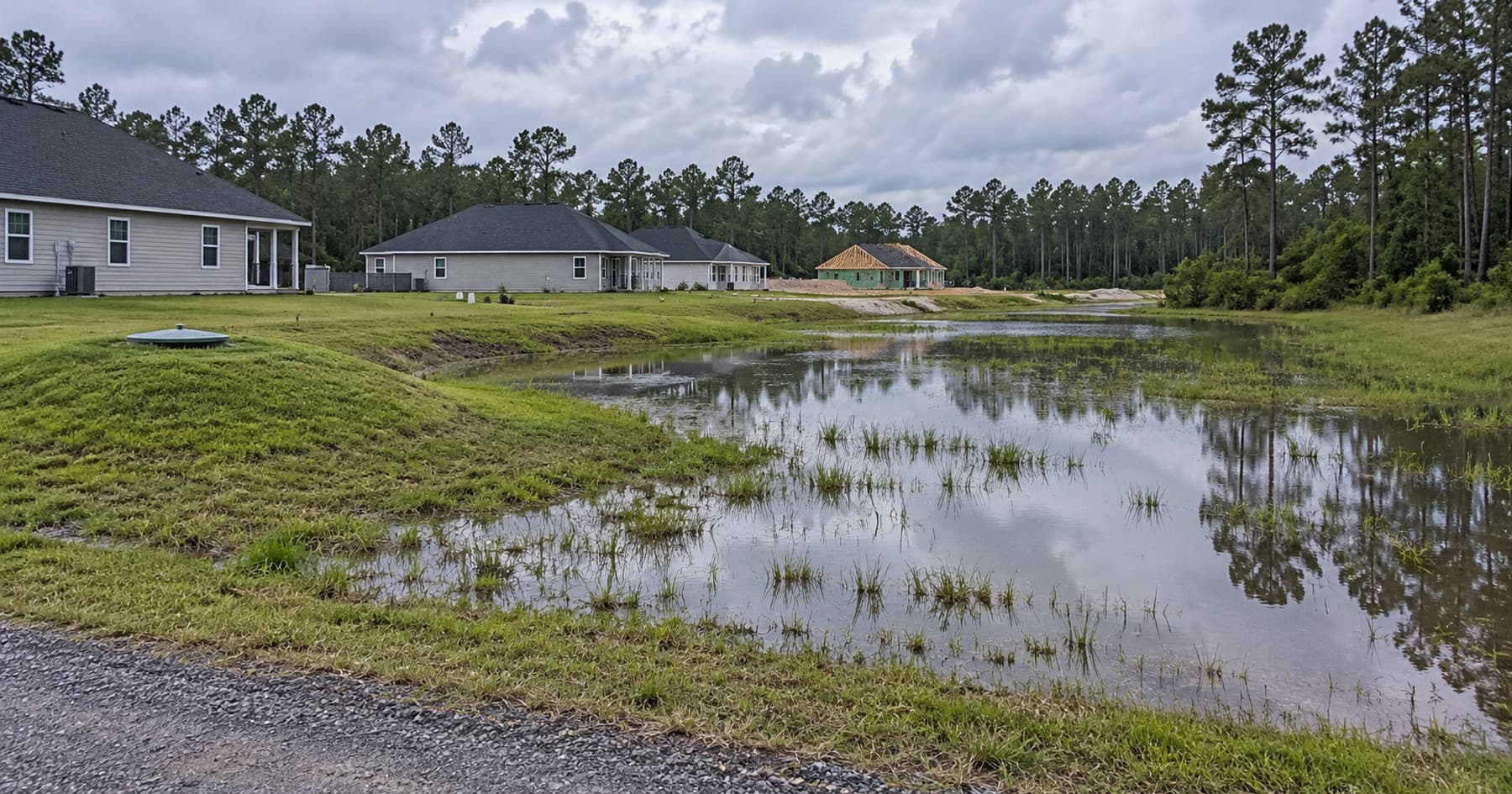
The Lowcountry encompasses the coastal counties from Georgetown through Charleston, Dorchester, Colleton, Beaufort, and Jasper. This region presents the most challenging conditions for south carolina soil types septic system design. The defining characteristics are high water tables, sometimes within 12 inches of the ground surface, tidal influence on groundwater levels, and a soil profile that typically consists of sand over clay or the distinctive pluff mud that characterizes salt marsh environments.
In many Lowcountry areas, the seasonal high water table rises to within inches of the drain field, violating the minimum vertical separation requirements that SCDES mandates for proper wastewater treatment. The 6-inch separation rule, which specifies the minimum distance between the bottom of the drain field and the seasonal high water table, is a frequent point of contention in coastal permitting. Many properties simply cannot achieve this separation with a conventional system.
Common system types for Lowcountry properties include:
- Mound systems: Elevate the drain field above the high water table using imported fill material. These are the most common solution but require significant space and proper engineering.
- Advanced Treatment Units (ATUs): Pre-treat wastewater to a higher standard before dispersal, allowing reduced drain field sizes and tighter vertical separation tolerances.
- Combination systems: ATU pre-treatment followed by mound or LPP dispersal, providing multiple layers of treatment for the most challenging sites.
How SCDES Site Evaluation Works
Before any septic system can be permitted in South Carolina, a licensed site evaluator must complete a formal evaluation following SCDES Regulation 61-56. The evaluation process includes:
- Soil borings: Multiple holes dug to a depth of at least 48 inches to examine the soil profile, identify restrictive layers, and determine the seasonal high water table depth based on soil mottling patterns.
- Percolation testing: Standardized tests measuring how quickly water drains through the soil at the proposed drain field depth. Results are expressed in minutes per inch or inches per hour.
- Site assessment: Evaluation of slope, setback distances from wells and property lines, flood zone status, and available repair area for a future replacement drain field.
- System recommendation: Based on the soil data, the evaluator recommends appropriate system types and sizes that will work on the specific site.
The site evaluation typically costs $400 to $800 and is separate from the system installation cost. Do not skip this step when buying undeveloped land. A property that cannot support an approved septic system may be unbuildable if public sewer is not available.
South Carolina Soil Types: Septic System Costs by Region
Your soil type is the single biggest factor in your septic installation budget. Here is what SC homeowners typically pay based on the system type their soil requires.
| System Type | Typical Soil Conditions | Cost Range |
|---|---|---|
| Conventional Gravity | Sandhills, favorable Coastal Plain | $4,000–$8,000 |
| Low-Pressure Pipe (LPP) | Moderate Piedmont clay, marginal Coastal Plain | $8,000–$12,000 |
| Mound System | High water table Lowcountry, poor Piedmont | $10,000–$15,000 |
| ATU + Drip Dispersal | Severe clay, very high water table | $12,000–$20,000+ |
| ATU + Mound Combination | Most challenging Lowcountry sites | $15,000–$25,000+ |
These ranges reflect 2026 pricing and include permitting, installation, and initial inspection. Actual costs vary by county, contractor availability, and site-specific conditions. The cost difference between a conventional system and an engineered system underscores why soil evaluation should be done before purchasing rural property in South Carolina.
For region-specific guidance, explore the coastal SC septic crisis, review septic pumping costs by region, and check SC septic permit requirements.
Frequently Asked Questions
How do I find out what soil type my SC property has?
Start with the USDA Web Soil Survey at websoilsurvey.nrcs.usda.gov, which provides free soil maps and data for any address in the state. This gives you a general idea of your soil series and its properties. For septic permitting purposes, you will still need a formal site evaluation by a licensed evaluator through SCDES, but the Web Soil Survey helps you understand what to expect before investing in the evaluation.
Can I install a conventional septic system in Piedmont clay soil?
In most cases, no. Piedmont clay septic installations typically require engineered systems like LPP, mound, or drip dispersal because percolation rates are too slow for conventional gravity designs. Some Upstate properties have pockets of better-draining soil within the clay matrix, but this can only be confirmed through professional soil borings and percolation testing. Do not assume a conventional system will work based on a neighbor's experience — soil conditions can vary significantly even between adjacent lots.
What is the minimum lot size for a septic system in South Carolina?
SCDES does not set a single statewide minimum lot size. Instead, the required lot size depends on the system type, soil conditions, setback requirements, and whether the property also has a private well. In practice, most counties require at least 0.5 acres for a septic-only lot and 1.0 to 1.5 acres when a private well is also present. Greenville County requires 1.5 acres minimum for properties with both septic and well. Check with your local SCDES office for specific requirements in your county.
How long does a site evaluation take in South Carolina?
The field work for a site evaluation typically takes 2 to 4 hours, but scheduling the evaluator and receiving the final report can take 2 to 6 weeks depending on the season. Spring and summer are the busiest times for new construction, so plan accordingly. The evaluation report is valid for 5 years under current SCDES regulations, so you can complete it well before you are ready to build.
Do coastal plain septic south carolina systems need special maintenance?
Conventional systems in the Coastal Plain generally need standard maintenance: pump every 3 to 5 years, avoid excessive water use, and keep the drain field clear of trees and vehicles. However, properties near the coast with higher water tables may need more frequent inspections and pumping. ATU systems anywhere in the state require annual maintenance contracts and regular inspections to maintain their SCDES operating permits. Find qualified septic professionals through our South Carolina services directory.
Find South Carolina providers
Connect with local professionals in South Carolina for your septic or well water needs.
Related reading
 state-guide
Well Drilling Depth South Carolina by Region
Well drilling depth south carolina ranges 30–400+ feet by region. Piedmont, Sandhills, Coastal Plain, and Lowcountry depths compared.
 city-guide
Horry County Septic Challenges: Growth & Flooding
Horry county septic systems face flooding, rapid growth, and high water tables near Myrtle Beach. Challenges and solutions covered.
 city-guide
Aiken County Septic & Well Water Guide for SC
Aiken county septic systems benefit from sandy Sandhills soils but face radium risks in well water. Costs, permits, and SRS concerns.