
Myrtle Beach Septic Services & Horry County Guide
Complete guide to myrtle beach septic services and Horry County systems. Covers coastal challenges, costs, and licensed contractors.
Myrtle beach septic services are essential for thousands of homeowners across Horry County, one of the fastest-growing counties in South Carolina. With an annual population growth rate exceeding 3.8 percent, Horry County is adding residents faster than almost any county in the southeastern United States. The permanent population has surpassed 370,000, but during peak tourist season, the Grand Strand's population swells to over a million as vacationers flock to the 60 miles of coastline stretching from Little River to Georgetown County. This dramatic seasonal surge places extraordinary demands on both public and private wastewater infrastructure.
While the beach communities of Myrtle Beach, North Myrtle Beach, and Surfside Beach are largely served by Grand Strand Water and Sewer Authority (GSWSA), a substantial portion of Horry County remains on individual septic systems. Inland communities like Conway (the county seat), Aynor, Loris, and the rapidly developing areas along the Highway 501 and Highway 544 corridors rely heavily on onsite wastewater treatment. Understanding the unique soil, water, and regulatory conditions of this fast-growing coastal county is critical for any homeowner with a septic system or private well.
Horry County: Fastest-Growing in South Carolina
Horry County's explosive growth has been driven by a combination of factors — affordable land compared to Charlotte and Charleston, a tourism-based economy that provides year-round employment, and the natural appeal of coastal living. The county encompasses a remarkable diversity of landscapes, from the beachfront high-rises of Myrtle Beach to the blackwater swamps of the Waccamaw River to the agricultural fields of the western part of the county. Each of these environments presents different challenges for septic system design and operation.
The Grand Strand Water and Sewer Authority has expanded its service area aggressively to keep pace with growth, but extending sewer mains to every new subdivision is neither economically feasible nor always practical. New developments in the inland portions of the county, particularly along the Highway 90 corridor between Conway and North Myrtle Beach and the Carolina Forest area, often rely on septic systems for individual homes even when community water service is available. This pattern is expected to continue as development pushes further into previously rural areas.
The South Carolina Department of Environmental Services (SCDES), which assumed DHEC's environmental permitting functions in 2024, regulates all septic system installations and repairs in Horry County. Every new installation requires a site evaluation and permit, and all contractors must hold valid SCDES licenses. The Myrtle Beach SCDES regional office handles permitting for the entire Horry County area.
Grand Strand Coastal Soils: Good Drainage but High Water Tables
The Grand Strand's coastal soils are predominantly sandy, which at first glance seems ideal for septic system operation. Sandy soils drain quickly, with percolation rates often exceeding 2 inches per hour — well above the minimum needed for conventional gravity septic systems. This good drainage means that many Horry County properties can support standard septic installations without the engineered alternatives (mound systems, LPP, ATUs) that are commonly needed in the Lowcountry around Charleston or the Piedmont clay of the Upstate.
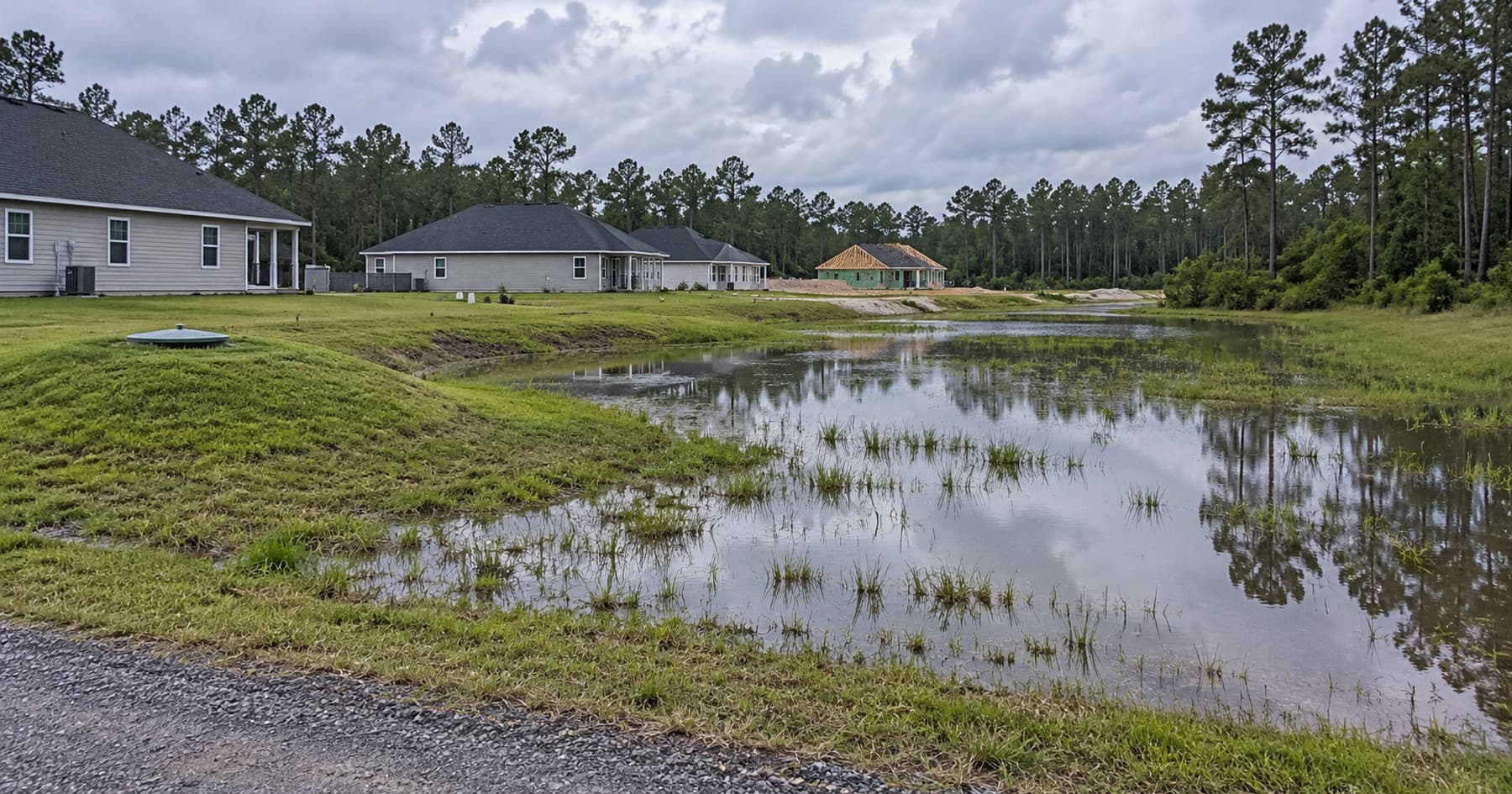
However, the Grand Strand's blessing of sandy soils comes with a significant complication: high water tables near the coast. Properties within a few miles of the ocean or along the Intracoastal Waterway frequently have seasonal high water tables within 18 to 30 inches of the ground surface. During heavy rain events — particularly during hurricane season from June through November — the water table can temporarily rise to the surface, completely saturating the soil profile and compromising septic system operation.
This combination of permeable sandy soils and high water tables creates a unique challenge: effluent drains quickly through the sand but may not receive adequate treatment before reaching groundwater because the treatment zone (the unsaturated soil between the drain field and the water table) is too shallow. SCDES requires a minimum vertical separation between the drain field and the seasonal high water table, and many beachfront and near-beach properties struggle to meet this requirement.
Seasonal Population Surge and Septic System Stress
The Grand Strand's tourism economy creates a seasonal pattern of septic system stress that is unique in South Carolina. Vacation rental homes, beach houses, and short-term rental properties may sit largely unused for months during the winter, then suddenly accommodate maximum occupancy during the peak summer months. This pattern of intermittent heavy use is particularly hard on septic systems for several reasons.
During periods of inactivity, the beneficial bacteria in the septic tank that break down solid waste can die off, reducing the tank's treatment capacity. When the system suddenly receives heavy hydraulic loading from a full house of vacationers — especially guests who may not be accustomed to septic system limitations — the result can be hydraulic overload, incomplete treatment, and potential system failure. Properties that serve as vacation rentals should consider more frequent pumping schedules, typically annually rather than the standard 3 to 5 year interval recommended for full-time residences.
The tourism surge also affects myrtle beach septic pumping availability. Pumping companies in the Grand Strand area report that demand for emergency service calls peaks in July and August, exactly when schedules are already full with routine maintenance and rental property turnovers. Smart homeowners schedule their annual pump-out during the off-season (January through March) when companies have more availability and sometimes offer lower rates.
Horry County Septic Systems: Conway and Inland Areas
Conway, the Horry County seat, sits along the Waccamaw River approximately 15 miles inland from Myrtle Beach. The soil conditions in Conway and the surrounding inland areas differ significantly from the coastal strip. The Waccamaw River floodplain has poorly drained soils with high organic content, while areas on higher ground have sandy loam soils that are generally favorable for septic systems.
The Conway area has experienced tremendous residential growth as homebuyers seeking more affordable alternatives to the beach communities discover the charm of this historic river town. Many of these new developments are on septic systems, and the inland location generally means fewer water table complications than beachfront properties face. However, properties near the Waccamaw River, Kingston Lake, or other waterways may have seasonal flooding concerns that affect system placement and design.
Aynor, Loris, and the Pee Dee Transition
The western and northern portions of Horry County transition from the Coastal Plain into the Pee Dee region of South Carolina. Communities like Aynor, Loris, Green Sea, and Nichols are firmly rural, with virtually all properties on septic systems and many on private wells. These areas have older septic systems — some dating to the 1960s and 1970s — that may not meet current SCDES standards. Homeowners purchasing older properties in these communities should budget for system evaluation and potential replacement.
The soils in western Horry County are a mix of sandy loam and clay loam, with conditions varying considerably from one property to the next. Site evaluations in this area sometimes reveal a clay restrictive layer at 24 to 36 inches below the surface, which can limit the effectiveness of conventional drain fields and may require modified system designs. Properties on higher ground with deep sandy profiles generally have the best conditions for conventional septic systems.
Myrtle Beach Septic Services: Typical Costs for Horry County
| Service | Typical Cost Range | Notes |
|---|---|---|
| Septic tank pumping | $275–$400 | Standard 1,000-gallon tank |
| Conventional system installation | $5,000–$9,000 | Most common in inland areas with good soils |
| Mound system installation | $10,000–$16,000 | Required near coast where water table is high |
| ATU installation | $8,000–$14,000 | Alternative to mound for high water table sites |
| Septic inspection (real estate) | $300–$450 | Includes pumping and condition assessment |
| Drain field repair/replacement | $3,500–$10,000 | Sandy soils generally make repair easier |
| Well drilling (inland areas) | $4,000–$8,000 | Shallow wells common in Coastal Plain |
Horry County costs are generally moderate compared to Charleston's Lowcountry premiums. Inland properties with good soil conditions can often support conventional systems at the lower end of the cost range, while beachfront and near-beach properties requiring engineered systems will pay significantly more. The seasonal demand cycle also affects pricing — emergency service during peak summer months may carry premium rates.
Carolina Forest and Highway 501 Corridor
The Carolina Forest area, located between Conway and Myrtle Beach along Highway 501, represents one of the most active residential development zones in the entire state. This master-planned community and the surrounding developments have absorbed thousands of new residents over the past decade. While much of Carolina Forest is served by GSWSA for sewer, surrounding developments along the Highway 501 and Highway 544 corridors include properties on individual septic systems.
The soils in the Carolina Forest area are typical of the Coastal Plain transition zone — sandy surface soils over loamy or clayey subsoil at varying depths. Most properties can accommodate conventional septic systems, though sites with shallow clay or high water tables may need modified designs. The rapid pace of development in this corridor has increased demand for site evaluations and septic installations, and homeowners should plan ahead for permitting timelines that may be longer than in less active areas.
Finding Licensed Contractors on the Grand Strand
All septic work in Horry County must be performed by SCDES-licensed contractors. The transfer of environmental functions from DHEC to SCDES in 2024 did not change licensing requirements — all existing licenses remained valid. When selecting a myrtle beach septic services provider or horry county septic contractor, verify their license status through SCDES and look for experience with local soil and water conditions.
The Grand Strand has a healthy market of septic professionals, but the seasonal nature of the tourism economy means that the best companies book up quickly during peak season. For routine maintenance and non-emergency work, scheduling during the off-season (October through April) typically results in faster service and sometimes lower prices. For emergency situations during peak season, expect to pay premium rates and potentially wait longer for service.
Find licensed septic and well professionals in our Horry County services directory to connect with qualified contractors serving the Myrtle Beach and greater Grand Strand area.
Finding reliable myrtle beach septic services is essential given the unique coastal challenges in Horry County. Experienced myrtle beach septic services providers understand high water table conditions, seasonal population surges, and flood zone requirements. When hiring myrtle beach septic services contractors, verify SCDES licensing and ask about their experience with coastal system types including ATUs and mound systems.
For coastal-specific guidance, read about the coastal SC septic crisis, check septic pumping costs, and review hurricane season septic preparation.
Frequently Asked Questions
How does the tourist season affect my septic system?
If your property serves as a vacation rental or hosts seasonal guests, the intermittent heavy-use pattern can stress your septic system. The beneficial bacteria that break down waste can decline during inactive periods, and sudden heavy loading during peak season can overwhelm a system that has been dormant. More frequent pumping (annually rather than every 3 to 5 years), guest education about septic-safe practices, and pre-season inspections can help prevent problems during the busiest months.
Do I need a mound system near the beach?
Properties near the beach or Intracoastal Waterway often have high water tables that make conventional gravity systems impossible. A site evaluation by a licensed soil evaluator will determine your seasonal high water table level. If the site cannot provide adequate vertical separation for a conventional system, a mound system, ATU, or other engineered alternative will be required. Many Grand Strand properties within a mile of the coast need some form of engineered system.
Is septic more expensive in Myrtle Beach than inland areas?
Generally yes. Beach and near-beach properties often require engineered systems (mound, ATU) due to high water tables, adding $3,000 to $8,000 over conventional system costs. Emergency service calls during peak tourist season may also carry premium rates. Inland properties in Conway, Aynor, and western Horry County typically have more favorable soil conditions that allow less expensive conventional installations.
How often should vacation rental properties pump their septic tank?
Vacation rental properties in the Grand Strand area should be pumped annually, regardless of tank size. The intermittent heavy-use pattern — months of light use followed by maximum occupancy during peak season — is harder on septic systems than steady year-round use. Annual pumping, ideally scheduled in late winter or early spring before the rental season begins, helps prevent the backups and failures that can ruin a guest's vacation and result in costly emergency repairs.
What about older septic systems in Loris and Aynor?
Rural communities in western Horry County often have older septic systems installed before current SCDES standards were in place. These systems may use outdated designs, undersized tanks, or improperly constructed drain fields. If you are purchasing an older property in the Pee Dee region of Horry County, a thorough septic inspection by a licensed professional is strongly recommended before closing. Replacement costs for failing older systems typically range from $5,000 to $12,000 depending on site conditions and system type required.
Find South Carolina providers
Connect with local professionals in South Carolina for your septic or well water needs.
Get free quotesRelated reading
 state-guide
Well Drilling Depth South Carolina by Region
Well drilling depth south carolina ranges 30–400+ feet by region. Piedmont, Sandhills, Coastal Plain, and Lowcountry depths compared.
 city-guide
Horry County Septic Challenges: Growth & Flooding
Horry county septic systems face flooding, rapid growth, and high water tables near Myrtle Beach. Challenges and solutions covered.
 city-guide
Best Septic Companies Suffolk VA (2026)
Best septic companies Suffolk VA homeowners rely on for pumping, CBPA compliance, inspections, and rural system repair.