South Carolina Septic System Types
South carolina septic system types range from conventional gravity to drip dispersal. Compare costs and soil needs across all SC regions.
Understanding the different south carolina septic system types is the first step toward choosing the right onsite wastewater solution for your property. South Carolina's geography spans four distinct regions — the Piedmont, Sandhills, Coastal Plain, and Lowcountry — each with unique soil conditions that determine which septic systems work best. Whether you are building a new home or replacing a failing system, this guide covers every system type approved by the South Carolina Department of Environmental Services (SCDES) under Regulation 61-56.
The right system depends on your soil type, lot size, water table depth, and budget. A home in the sandy Sandhills near Aiken might qualify for a simple conventional system, while a property in Greenville's Piedmont clay may require an advanced treatment unit costing three times as much. Let's explore each option so you can make an informed decision.
South Carolina Septic System Types: Conventional Gravity Systems
Conventional gravity systems are the most common and least expensive septic system type in South Carolina. They work by allowing wastewater to flow by gravity from the home into a septic tank, where solids settle and liquids pass into a drain field. The drain field consists of perforated pipes laid in gravel-filled trenches, where effluent slowly percolates through the soil for natural treatment.
Conventional systems work best in soils with moderate percolation rates — typically sandy loam or loamy sand. In South Carolina, these conditions are most common in the Sandhills region and parts of the Coastal Plain. The soil must have at least 18 inches of suitable material below the trench bottom before hitting a restrictive layer such as clay or rock.
Installation costs for conventional gravity systems in SC typically range from $4,000 to $8,000, making them the most affordable option. The system requires minimal maintenance beyond regular pumping every 3 to 5 years. However, these systems are not suitable for properties with clay soils, high water tables, or steep slopes.
Best Regions for Conventional Systems
The Sandhills region running from Aiken through Lexington to Chesterfield County offers some of the best soil conditions for conventional septic systems. Sandy soils in this belt drain quickly and provide excellent natural filtration. Parts of the upper Coastal Plain in Florence and Darlington counties also support conventional systems where sandy loam soils dominate.
Low-Pressure Pipe (LPP) Systems in South Carolina
Low-pressure pipe systems represent the next step up when soil conditions are marginal for conventional gravity systems. LPP systems use a pump to distribute effluent evenly across the entire drain field through small-diameter pipes with calibrated orifices. This uniform distribution allows the soil to absorb effluent more efficiently than gravity-fed systems.
SCDES often requires LPP systems when percolation rates fall between 30 and 60 minutes per inch, which is common in transitional soils between the Sandhills and Piedmont regions. The pump dosing mechanism delivers effluent in timed cycles, giving the soil rest periods between doses for better treatment.
LPP installation costs in South Carolina range from $8,000 to $14,000. The higher cost covers the dosing tank, pump, control panel, and specialized piping. Maintenance is more involved than conventional systems — you need to inspect the pump and control panel annually, and the small orifices in the distribution pipes can clog if the tank is not pumped regularly.
LPP System Advantages
LPP systems provide several benefits over conventional systems. They work on sites with less permeable soils, can handle shallower soil depths, and distribute effluent more evenly. For SC homeowners with borderline soil conditions, an LPP system may be the difference between getting a septic permit and needing a much more expensive engineered system.
Mound Septic Systems for Challenging SC Sites
Mound systems are designed for sites where natural soil conditions cannot support a below-ground drain field. The system builds an elevated sand mound above the natural soil surface, creating additional treatment depth. Effluent is pumped up into the mound, where it filters through engineered sand media before reaching the native soil.
In South Carolina, mound systems are commonly required in two scenarios. First, in Piedmont areas where rock or clay is too close to the surface. Second, in Lowcountry areas where the seasonal high water table is within 12 to 24 inches of the ground surface. The mound provides the vertical separation needed for adequate wastewater treatment.
Mound system costs in SC range from $10,000 to $18,000. The sand fill, specialized construction, and pumping equipment all add to the cost. These systems require a larger footprint than conventional systems, so lot size requirements are typically 1.5 acres or more. The visible mound on the property is the main aesthetic drawback, though many homeowners landscape around it.
SC Septic System Options: Advanced Treatment Units (ATU)
Advanced treatment units represent the highest level of onsite wastewater treatment available in South Carolina. ATUs use mechanical and biological processes to treat wastewater to near-drinking-water quality before it reaches the soil. Most ATUs employ an aeration chamber where oxygen-loving bacteria break down organic matter much more thoroughly than a conventional septic tank.
SCDES requires ATUs on sites with severely limiting soil conditions — very slow percolation, shallow rock, high water tables, or small lots that cannot accommodate a standard drain field. Because ATUs produce a cleaner effluent, the drain field can be smaller and the soil treatment requirements are less stringent.
ATU costs in South Carolina typically run from $15,000 to $25,000, including the treatment unit, reduced-size drain field, and required engineering. The ongoing costs are also higher — ATUs need quarterly maintenance inspections, annual service contracts, and the aeration blower requires electricity to run continuously. SCDES mandates an ongoing maintenance agreement with a licensed operator for all ATU installations.
Popular ATU Brands in South Carolina
Several ATU manufacturers operate in the SC market. Clearstream, Norweco Singulair, and BioMicrobics are the most commonly installed brands. Each has received approval from SCDES for use in the state. Your engineer will recommend a specific unit based on your household size, soil conditions, and budget.
Drip Dispersal Systems in South Carolina
Drip dispersal systems are the most advanced and expensive septic system type available in South Carolina. These systems distribute highly treated effluent through a network of drip irrigation tubing installed just 6 to 12 inches below the soil surface. The shallow placement takes advantage of the biologically active topsoil zone for final treatment.
Drip systems are typically the last resort for sites where no other system type is feasible. They work on steep slopes, in very tight soils, on small lots, and on sites with shallow bedrock. The effluent must be pre-treated to a very high standard — usually through an ATU — before entering the drip lines, because the narrow tubing emitters would clog with conventional septic tank effluent.
Installation costs for drip dispersal systems in SC range from $18,000 to $30,000. This includes the ATU pre-treatment unit, filtration system, pressure-compensating drip tubing, and extensive controls. The system requires professional maintenance and monitoring. Despite the high cost, drip systems make development possible on properties that would otherwise be unbuildable.
Alternative Septic Systems SC: Chamber Systems
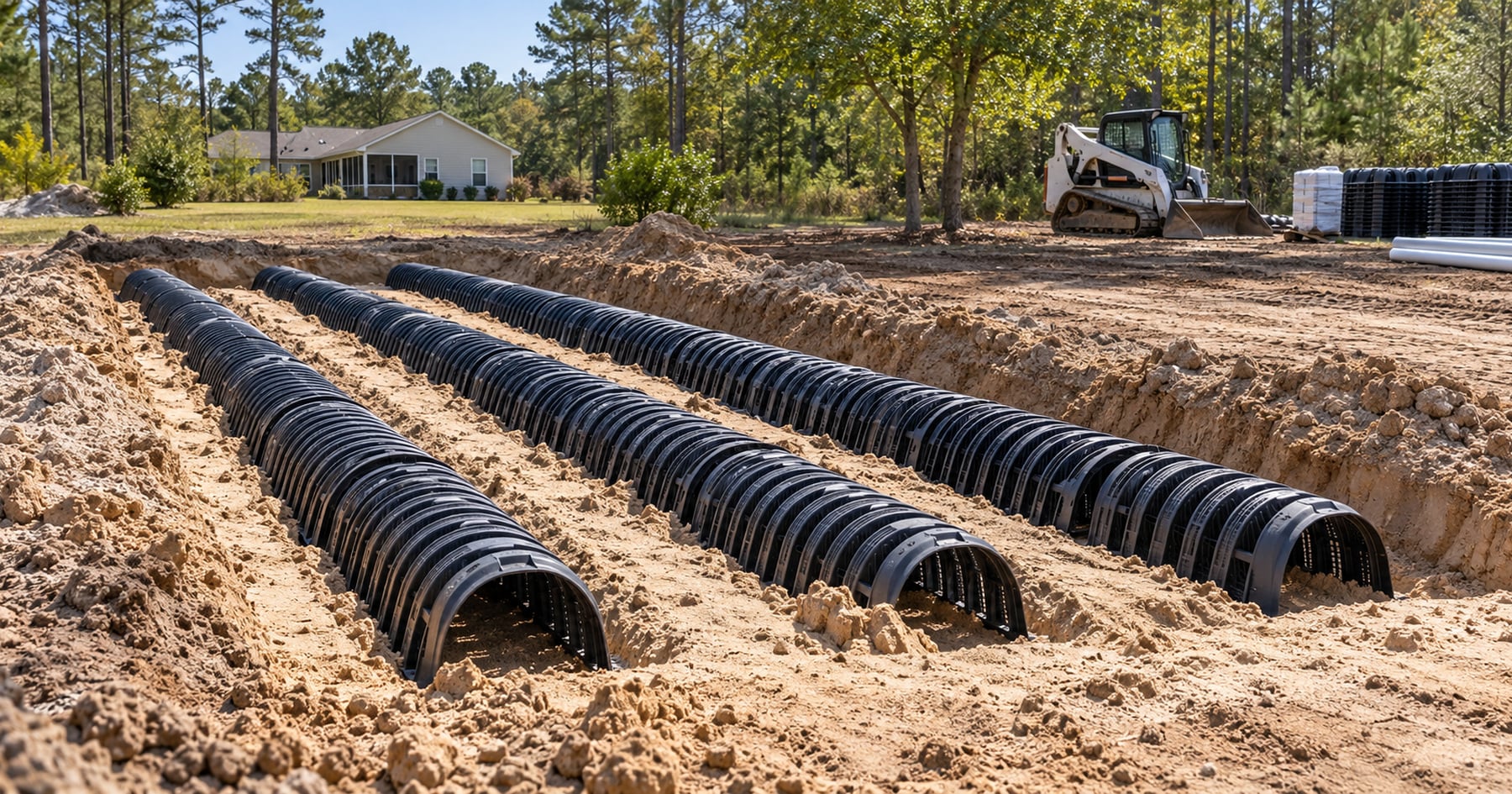
Chamber systems have gained popularity in South Carolina as an alternative to traditional gravel-and-pipe drain fields. Instead of gravel-filled trenches, these systems use prefabricated plastic chambers that create an open void for effluent storage and soil contact. The chambers sit directly on the native soil, and effluent seeps through the chamber walls and floor into the surrounding ground.
Chamber systems offer several practical advantages for SC installations. They eliminate the need to haul gravel to the site, reducing both cost and construction time. The open chamber design provides more storage capacity than gravel trenches, making them more resilient during periods of heavy use. Many SC installers prefer chambers because they are lighter and easier to install than traditional gravel-and-pipe systems.
Costs for chamber systems are comparable to conventional systems, typically running $5,000 to $9,000 in South Carolina. They work in the same soil conditions as conventional gravity systems, so they are most suitable for the Sandhills and Coastal Plain regions.
Septic System Types South Carolina: Regional Comparison
Choosing the right system depends heavily on which part of South Carolina your property is located in. Here is a breakdown by region.
| SC Region | Typical Soils | Best System Types | Average Cost Range |
|---|---|---|---|
| Piedmont (Upstate) | Red clay, saprolite | LPP, ATU, Drip | $8,000–$25,000 |
| Sandhills (Central) | Deep sand, sandy loam | Conventional, Chamber | $4,000–$9,000 |
| Coastal Plain | Variable (sand to clay) | Conventional, LPP, Mound | $4,000–$18,000 |
| Lowcountry | Sandy with high water table | Mound, ATU, Drip | $10,000–$30,000 |
The Piedmont region generally has the highest septic system costs because clay soils eliminate conventional and chamber options. Properties near Greenville and Spartanburg often need engineered systems. The Sandhills offer the most favorable conditions and lowest costs. The Lowcountry is challenging due to high water tables, even though the sandy soils themselves drain well.
SCDES Permit Requirements by System Type
All septic system installations in South Carolina require a permit from SCDES, but the permitting process varies by system complexity. Conventional and chamber systems follow a standard permit process that includes a site evaluation and soil testing. LPP systems may require additional engineering depending on site conditions. ATU and drip systems always require professional engineering, stamped plans, and a longer review period.
The base permit fee in South Carolina is approximately $300 for new installations. Engineering review adds to the timeline and cost. Expect 4 to 6 weeks for conventional permits and 8 to 12 weeks for engineered systems. For detailed permit requirements, see our South Carolina septic permit guide.
Soil Testing and System Selection in SC
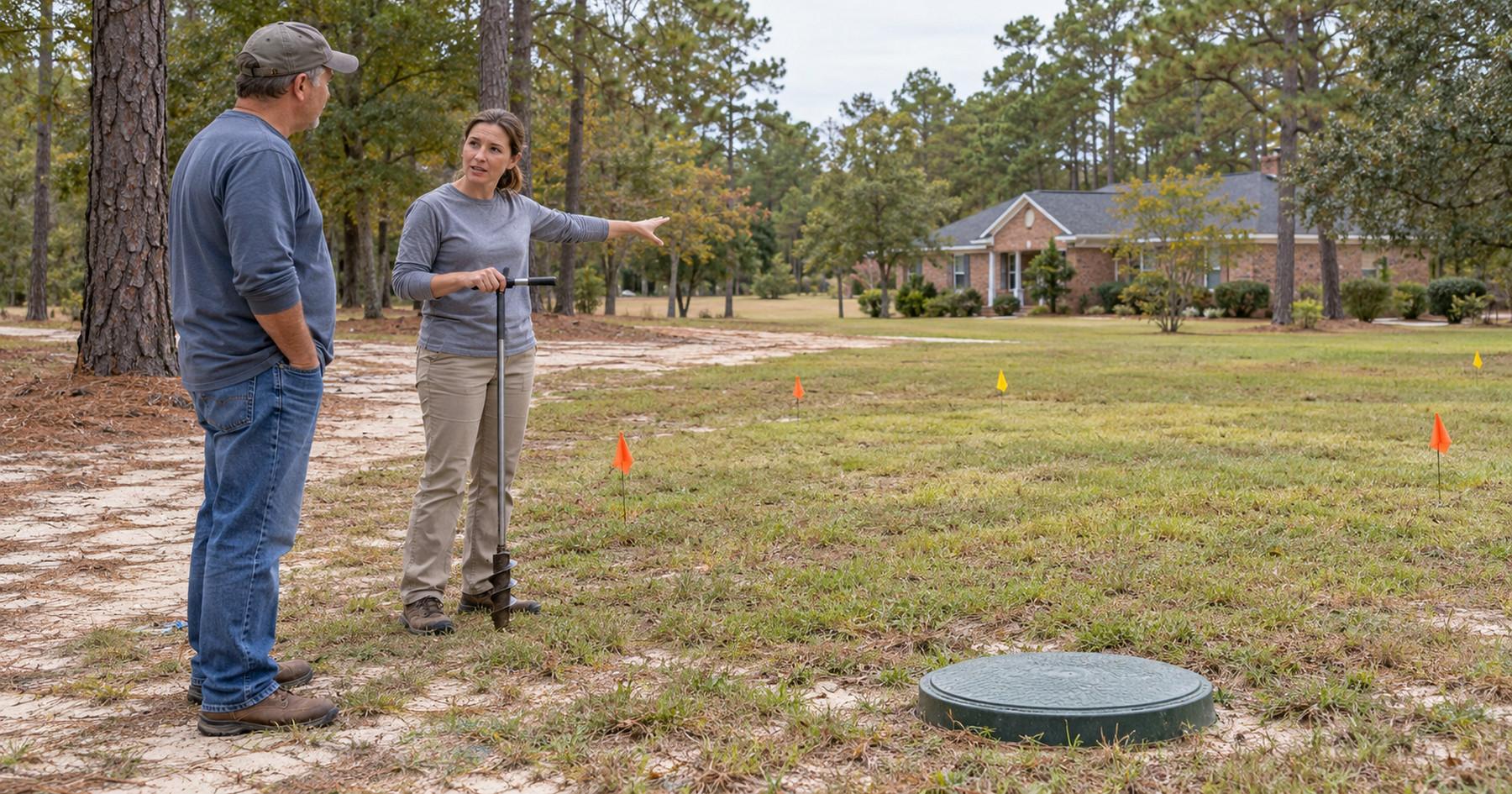
Before SCDES will issue a permit for any system type, a soil evaluation must be completed on the property. A licensed soil evaluator digs test pits or borings to determine the soil profile, percolation rate, depth to restrictive layers, and seasonal high water table. These results determine which system types are eligible for your site.
Understanding your soil type is essential. Our South Carolina soil types and septic systems guide explains how different soil conditions across the state affect your system options. If you are buying property and plan to install a septic system, always get a soil evaluation before closing.
Cost Comparison of SC Septic System Types
| System Type | Installation Cost | Annual Maintenance | Lifespan | Electricity Needed |
|---|---|---|---|---|
| Conventional Gravity | $4,000–$8,000 | $100–$200 | 25–30 years | No |
| Chamber | $5,000–$9,000 | $100–$200 | 25–30 years | No |
| Low-Pressure Pipe | $8,000–$14,000 | $200–$400 | 20–25 years | Yes |
| Mound | $10,000–$18,000 | $200–$400 | 20–25 years | Yes |
| ATU | $15,000–$25,000 | $400–$800 | 15–20 years | Yes |
| Drip Dispersal | $18,000–$30,000 | $500–$1,000 | 15–20 years | Yes |
When comparing costs, remember that the purchase price is just the beginning. ATU and drip systems carry significant ongoing maintenance expenses. A conventional system at $6,000 with $150 per year in maintenance costs about $10,500 over 30 years. An ATU at $20,000 with $600 per year costs $29,000 over 15 years before needing replacement. Factor in total cost of ownership when making your decision.
Browse our South Carolina septic and well water directory for licensed installers and service professionals throughout the state.
Frequently Asked Questions
Which septic system type is most common in South Carolina?
Conventional gravity systems are the most commonly installed type across South Carolina, particularly in the Sandhills and Coastal Plain regions where sandy soils support natural drainage. However, in the Piedmont and Lowcountry, alternative systems like LPP, ATU, and mound systems are more common because soil conditions do not support conventional installations.
Can I choose which septic system type to install in SC?
Your options are determined by the soil evaluation results and SCDES regulations. If your site qualifies for a conventional system, you can choose that option. However, if soil conditions require an alternative system, SCDES will specify which types are acceptable. Your engineer and installer can help you select the best option within those approved types.
How long does a septic system last in South Carolina?
System lifespan varies by type and maintenance. Conventional gravity systems typically last 25 to 30 years with proper care, while ATUs and drip systems have a 15 to 20 year lifespan due to mechanical components. Regular pumping every 3 to 5 years, annual inspections, and careful water use habits are the biggest factors in extending system life regardless of type.
Do alternative septic systems require more maintenance in SC?
Yes. Conventional and chamber systems need only periodic pumping and occasional inspections. LPP and mound systems require annual pump and control panel checks. ATUs need quarterly inspections and an ongoing maintenance contract with a licensed operator, which SCDES mandates as a permit condition. Drip systems require the most maintenance, including regular filter cleaning and emitter flushing.
Find South Carolina providers
Connect with local professionals in South Carolina for your septic or well water needs.
Get free quotesRelated reading
 city-guide
Lexington County Septic & Well Water Guide for SC
Lexington county septic systems benefit from sandy Sandhills soils near Lake Murray. Permits, costs, radium risks in well water, and SCDES requirements covered.
 state-guide
Well Drilling Depth South Carolina by Region
Well drilling depth south carolina ranges 30–400+ feet by region. Piedmont, Sandhills, Coastal Plain, and Lowcountry depths compared.
 cost
Septic System Cost in Minnesota (2026): Trench, Mound, and ATG Prices
Septic system cost in Minnesota runs $12,000 to $45,000 installed. See trench, mound, and at-grade prices by system type, soil, and county permit fees.